

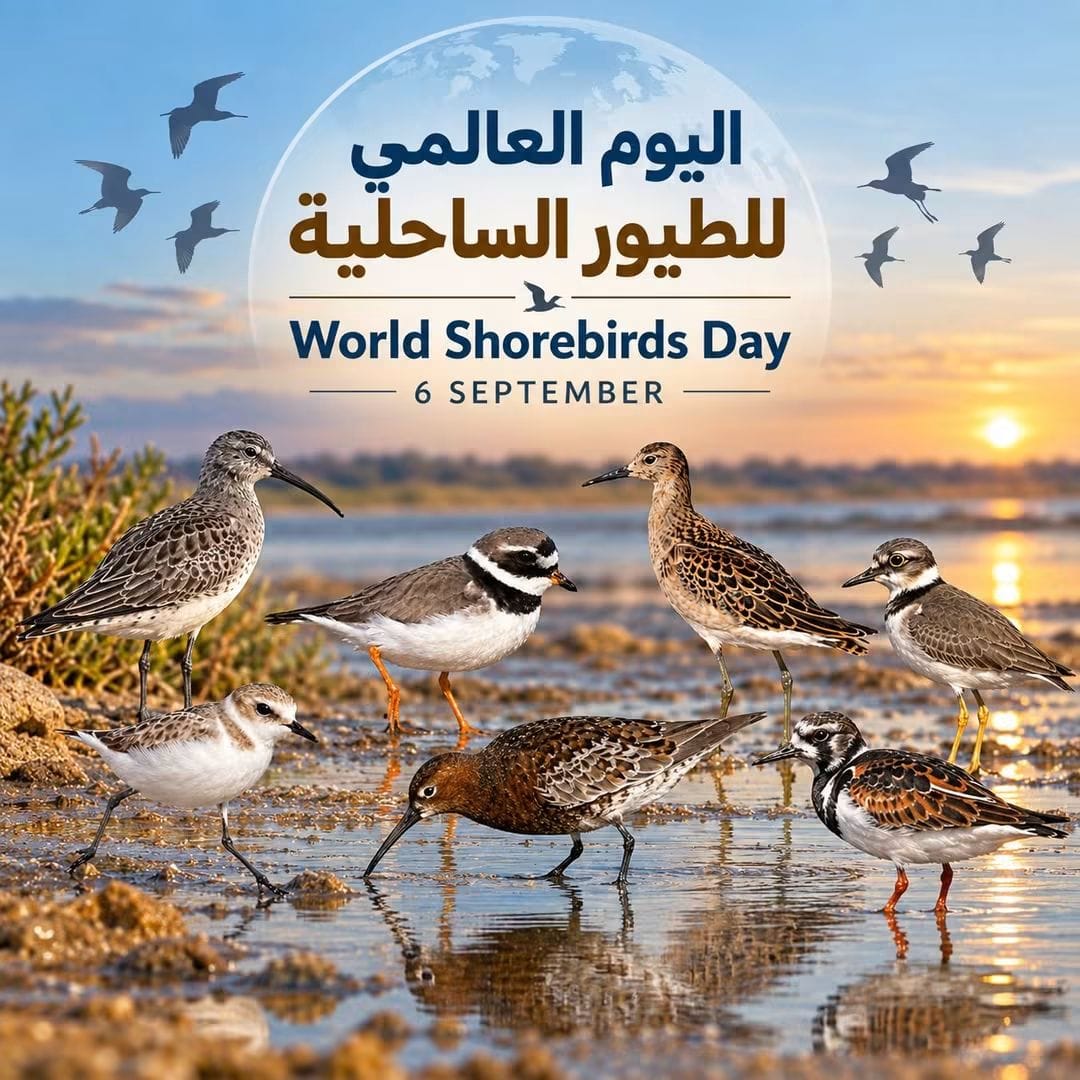

World Shorebirds Day | 6 September
On 6 September each year, the world celebrates World Shorebirds Day, an occasion dedicated to highlighting one of the groups of birds most closely associated with wetlands, coastal habitats, and migration, while drawing attention to the growing challenges they face worldwide.
World Shorebirds Day was established in 2014 and has gradually developed into an international initiative bringing together bird monitoring, scientific research, public awareness, and conservation efforts focused on shorebirds and the habitats they depend upon.
Despite their common name, “shorebirds,” many species do not depend exclusively on coastal environments. They also use mudflats, marshes, lakes, salt marshes, estuaries, flooded fields, and inland wetlands. Migratory species, in particular, depend on a network of sites throughout their annual journeys between breeding and wintering grounds. Consequently, the loss or degradation of a single site along a migration route can affect bird populations across multiple countries and even continents.
Shorebirds are facing increasing pressures, including the loss and degradation of wetlands, destruction of migration stopover sites, human disturbance, pollution, illegal hunting, and climate change.
But protecting these birds begins with knowledge and monitoring.
One of the key components of this initiative is Global Shorebird Counts. From 1–7 September, researchers, photographers, birdwatchers, and members of the public can participate by observing and documenting shorebird species, their numbers, and the locations where they occur. When collected regularly and accurately, these data help build a broader understanding of migration patterns, changes in bird populations, and the ways in which birds use different habitats.
In Libya, this occasion is particularly significant. The country’s location along the Mediterranean Sea places its coastline and wetlands within the wider network of sites that migratory birds may use during their journeys between breeding and wintering grounds.
Therefore, recording a Common Sandpiper, plover, curlew, dunlin, or any other shorebird is not simply a casual observation. It can become part of a larger scientific record that helps us understand how birds use our sites and whether their populations are changing over time.
On World Shorebirds Day, don’t just watch the birds…
Observe. Identify. Count. Document. Share your data.
Every well-documented observation can add another piece to the larger picture of bird migration and the condition of wetlands around the world.
Protecting shorebirds begins with protecting the sites they depend on throughout their annual journeys.
Leave a Reply