

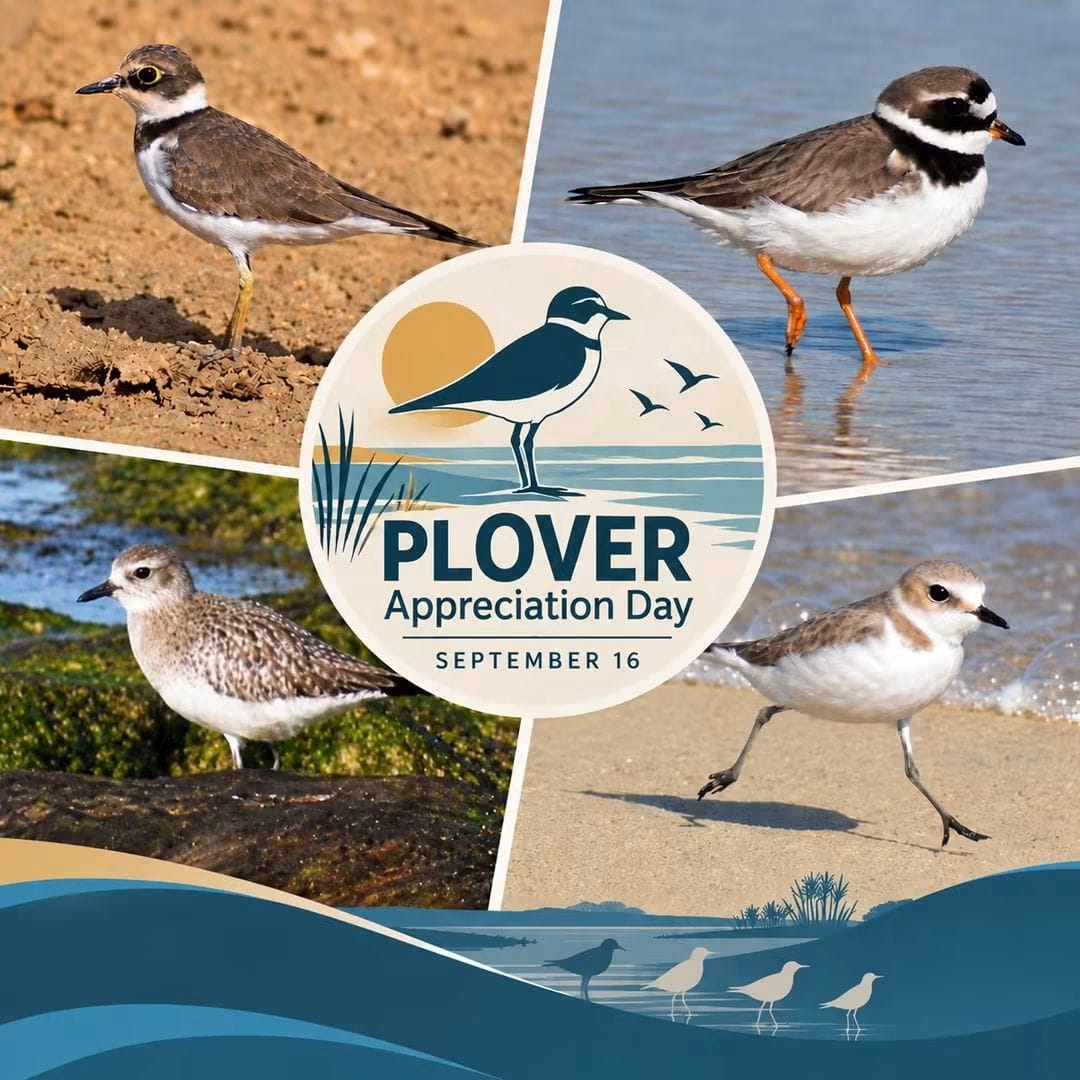

September 16 | Plover Appreciation Day
September 16 marks Plover Appreciation Day, an awareness occasion dedicated to highlighting the importance of plovers and the challenges they face as a result of habitat loss and human activities, particularly along coastlines and in wetland environments.
Plovers belong to the family Charadriidae, a diverse group of shorebirds that exhibit a wide range of feeding, breeding, and behavioral adaptations.
Many plover species lay their eggs in shallow scrapes on the ground. Their nests and eggs are often highly camouflaged, helping them blend into their surroundings. Despite this adaptation, adults, eggs, and chicks remain vulnerable to trampling, disturbance, and predation.
Some species also use distraction displays, such as the broken-wing display, to lure potential predators away from their nests and young.
The Libyan bird list includes 12 species of plovers and lapwings recorded in Libya, with their status varying from winter visitor and passage migrant to resident breeder and occasional visitor:
1️⃣ Little Ringed Plover – Charadrius dubius
2️⃣ Common Ringed Plover – Charadrius hiaticula
3️⃣ Kentish Plover – Anarhynchus alexandrinus
4️⃣ Siberian Sandplover – Anarhynchus mongolus
5️⃣ Greater Sandplover – Anarhynchus leschenaultii
6️⃣ Eurasian Golden Plover – Pluvialis apricaria
7️⃣ Grey Plover – Pluvialis squatarola
8️⃣ Egyptian Plover – Pluvianus aegyptius
9️⃣ Spur-winged Lapwing – Vanellus spinosus
🔟 White-tailed Lapwing – Vanellus leucurus
1️⃣1️⃣ Northern Lapwing – Vanellus vanellus
1️⃣2️⃣ Eurasian Dotterel – Eudromias morinellus
Libya’s coastlines, wetlands, and open habitats play an important role in providing feeding and resting sites for both migratory and resident birds. Protecting these habitats and reducing human disturbance, particularly during breeding and migration periods, are therefore essential steps towards conserving biodiversity.
How can we help protect plovers?
▪️ Keep a safe distance from birds and their nests.
▪️ Avoid walking through breeding areas.
▪️ Keep dogs under control near sensitive habitats.
▪️ Support scientific monitoring and environmental awareness programmes.
▪️ Help protect wetlands and coastal habitats from pollution and degradation.
On this occasion, the Libyan Society for Birds (LSB) encourages for greater awareness of the importance of plovers and other shorebirds in Libya. Respecting their natural habitats—particularly breeding sites, wetlands, and coastal areas—and working to reduce the threats they face are essential for ensuring their continued survival and conservation
Leave a Reply