


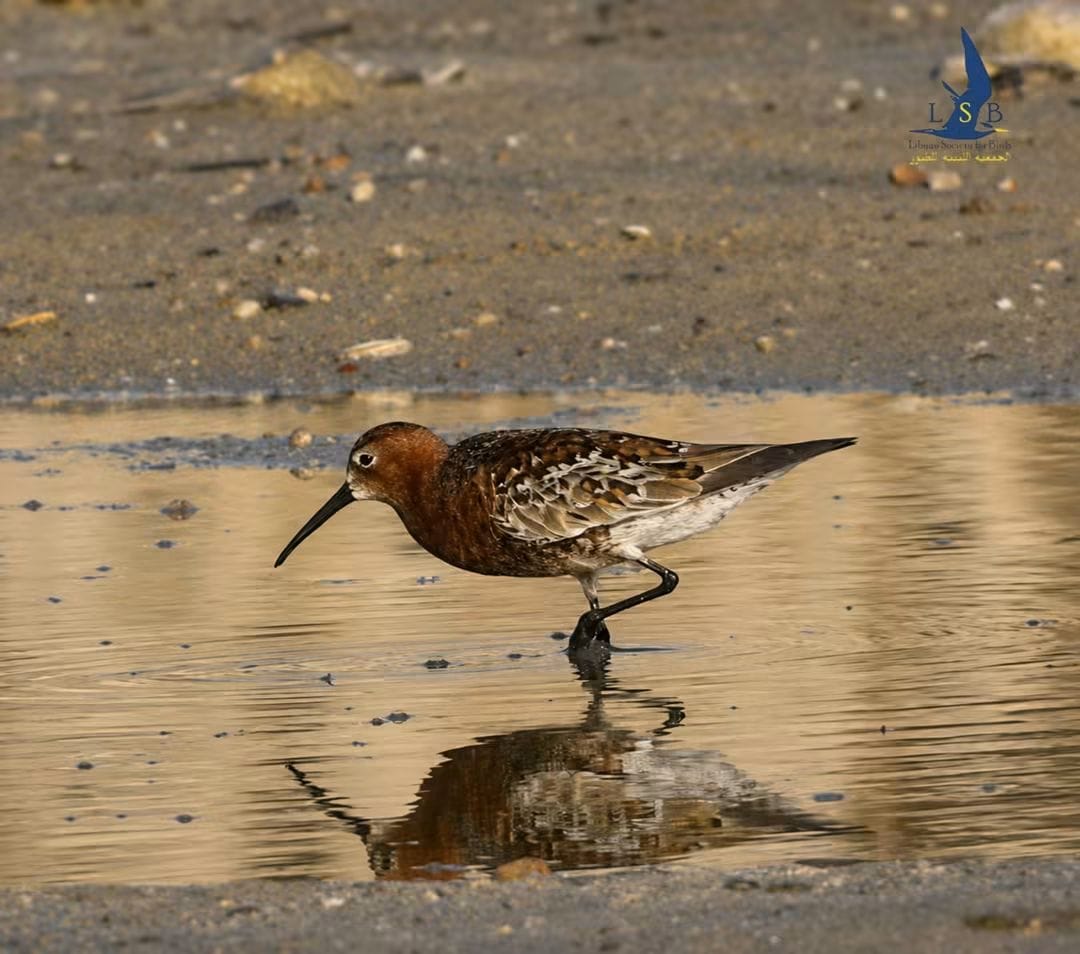


Curlew Sandpiper Returns to Africa via Eastern Libya During Autumn Migration as Part of an International Shorebird Tracking Project.
As part of the South Africa’s Shorebird Tracking Project, which tracks migratory shorebirds to better understand their migration routes and stopover sites, a number of Curlew Sandpipers (Calidris ferruginea) were fitted with tracking devices along the west coast of South Africa, near Velddrif and Langebaan Lagoon. The project aims to investigate the migration routes and key stopover sites used by these birds during their long-distance journeys between Africa and their Asian breeding grounds.
Libya had previously appeared in the tracking data during the spring migration of another individual from the same project, named SPERRGEBIET, which crossed southeastern Libya in May 2026 while continuing towards Egypt. Now, tracking data have revealed another Curlew Sandpiper, BARBER, returning to Africa via eastern Libya during its southbound autumn migration from its Asian breeding grounds.
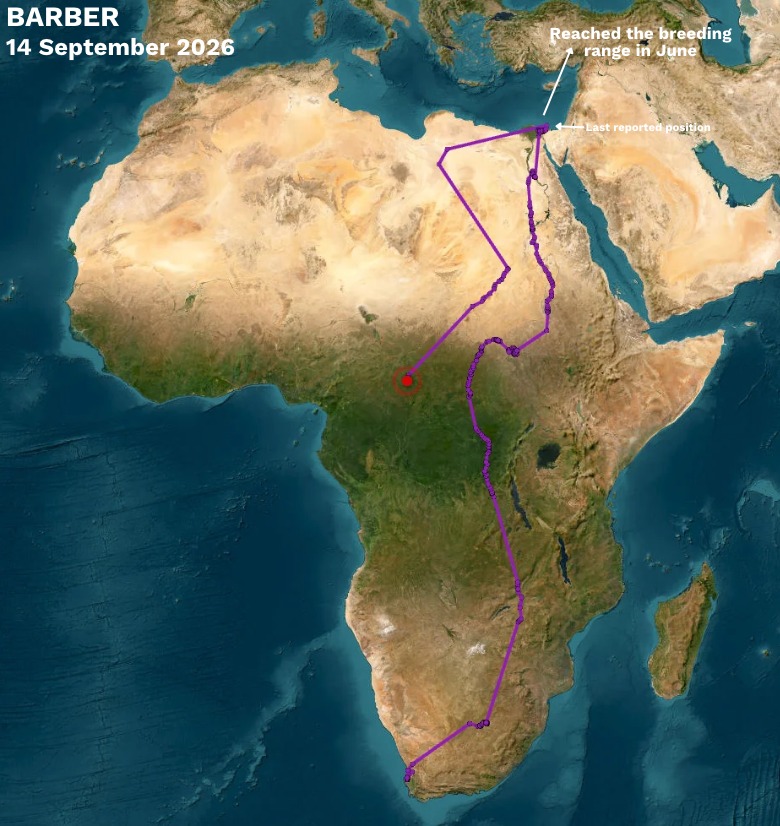
BARBER’s migration journey
17 April 2026: BARBER was among the last individuals to leave Velddrif, South Africa, beginning its north-easterly journey towards Barberspan Nature Reserve, a wetland after which the bird was named.
April–May 2026: BARBER followed a relatively more central route compared with several other birds being tracked as part of the project, continuing northward across the African continent.
14 June 2026: The bird reached the Nile Delta after covering a considerable distance across Africa.
16 June 2026: BARBER continued northward and reached Asia, where it proceeded towards its breeding grounds. Project information indicates that BARBER followed a somewhat different route from several of the other tracked individuals.
Several months later: BARBER remained in its breeding areas before beginning its southbound return journey towards Africa.
12 September 2026: BARBER returned to the African continent via eastern Libya, marking one of the notable stages of its return migration.
After entering eastern Libya: The bird travelled south-eastwards through Sudan, before changing direction towards the south-west and crossing into the Central African Republic.
15 September 2026: The latest tracking data indicate that BARBER is currently north-west of Bangui, the capital of the Central African Republic, continuing its journey across the African continent.
BARBER’s return through eastern Libya adds another important record to the tracking data demonstrating the role of Libyan landscapes in the movements of migratory shorebirds.
Notably, BARBER’s return route differs from that of SPERRGEBIET, despite both individuals belonging to the same species, Calidris ferruginea, and being tracked as part of the same international project. SPERRGEBIET crossed southeastern Libya in May during spring migration, heading towards Egypt, whereas BARBER crossed eastern Libya in September during autumn migration before travelling south-east through Sudan and then south-west into the Central African Republic.
Leave a Reply