





Scientific Study Reveals Variation in Tree Pipit Migration Routes and Documents Its Passage Through Libya
A scientific study published in the Journal of Ornithology in 2026, titled “Unexpected variation in migration routes and nonbreeding residency of Tree Pipits (Anthus trivialis) from a central European breeding population,” provides new insights into the diversity of migration routes used by the Tree Pipit (Anthus trivialis) and documents its passage through Libya during seasonal migration.
The study was conducted in the Křivoklátská vrchovina region of Central Bohemia, Czech Republic, where researchers fitted male Tree Pipits with geolocators.
Fieldwork was conducted over five breeding seasons between 2019 and 2024. A total of 75 males were captured, and geolocators were deployed on 54 individuals. The researchers successfully retrieved devices from seven birds, allowing them to reconstruct their movements throughout the annual cycle.
The study revealed substantial variation in migration routes among individuals from the same breeding population. Key findings included:
🔹 Different Mediterranean crossing routes:
The birds crossed the Mediterranean Sea along different western, central, and eastern routes.
🔹 Diverse wintering areas:
Wintering areas ranged from West Africa to Nigeria and the Lake Chad region.
🔹 Extended winter residency:
The birds spent an average of approximately 160 days in their wintering areas.
🔹 Movements between wintering sites:
Some individuals moved between different wintering sites, with distances of approximately 101 km and 403 km separating some of these locations.
🔹 Different migration durations:
The median duration of autumn migration was 52 days, compared with 20 days during spring migration, meaning that spring migration was approximately 61% shorter according to the study’s results.
Overall, the findings demonstrate that migration routes are not necessarily fixed for all individuals within the same breeding population. Instead, routes may vary according to the individual, season, and prevailing environmental conditions.
The Tree Pipit’s passage through Libya:
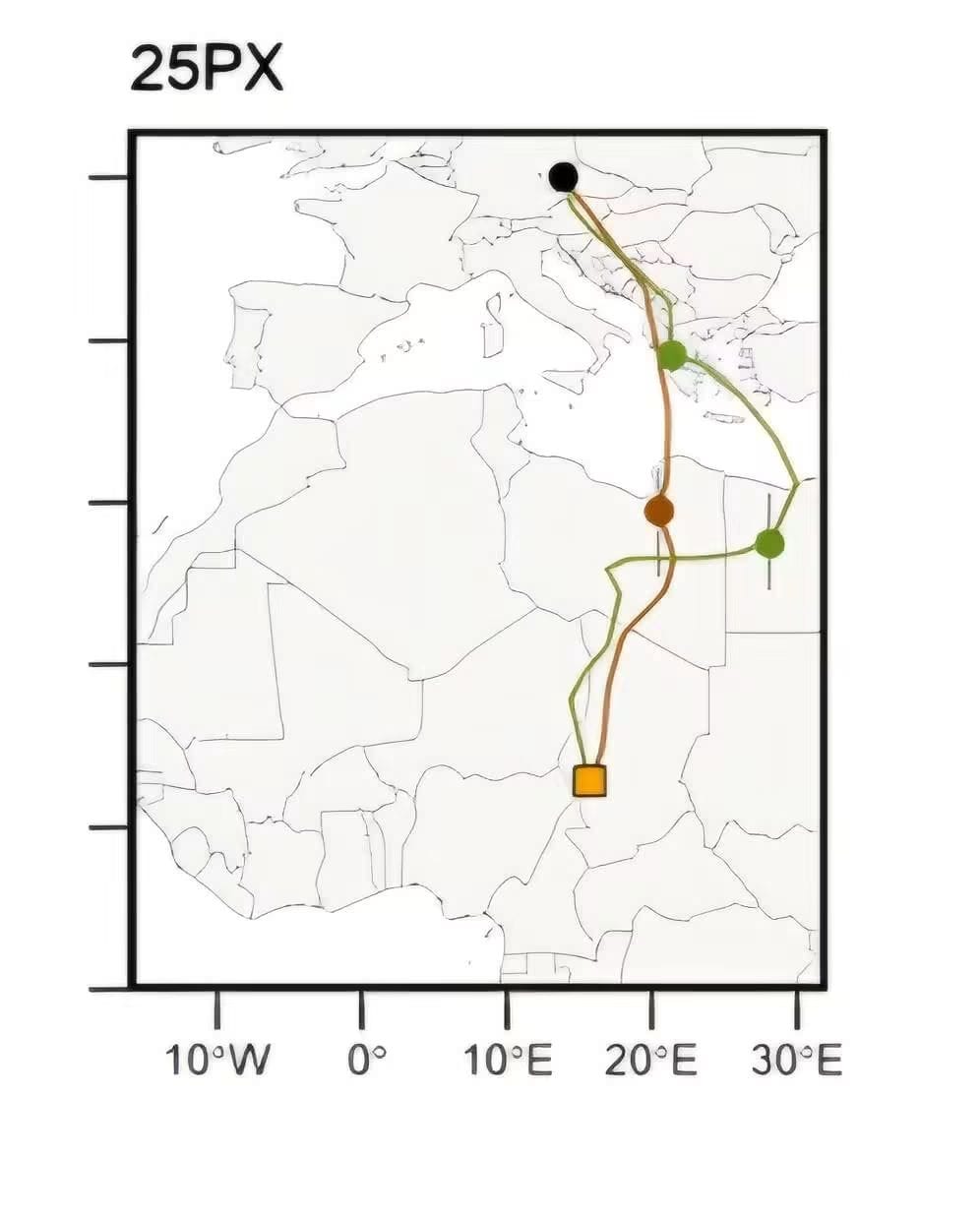
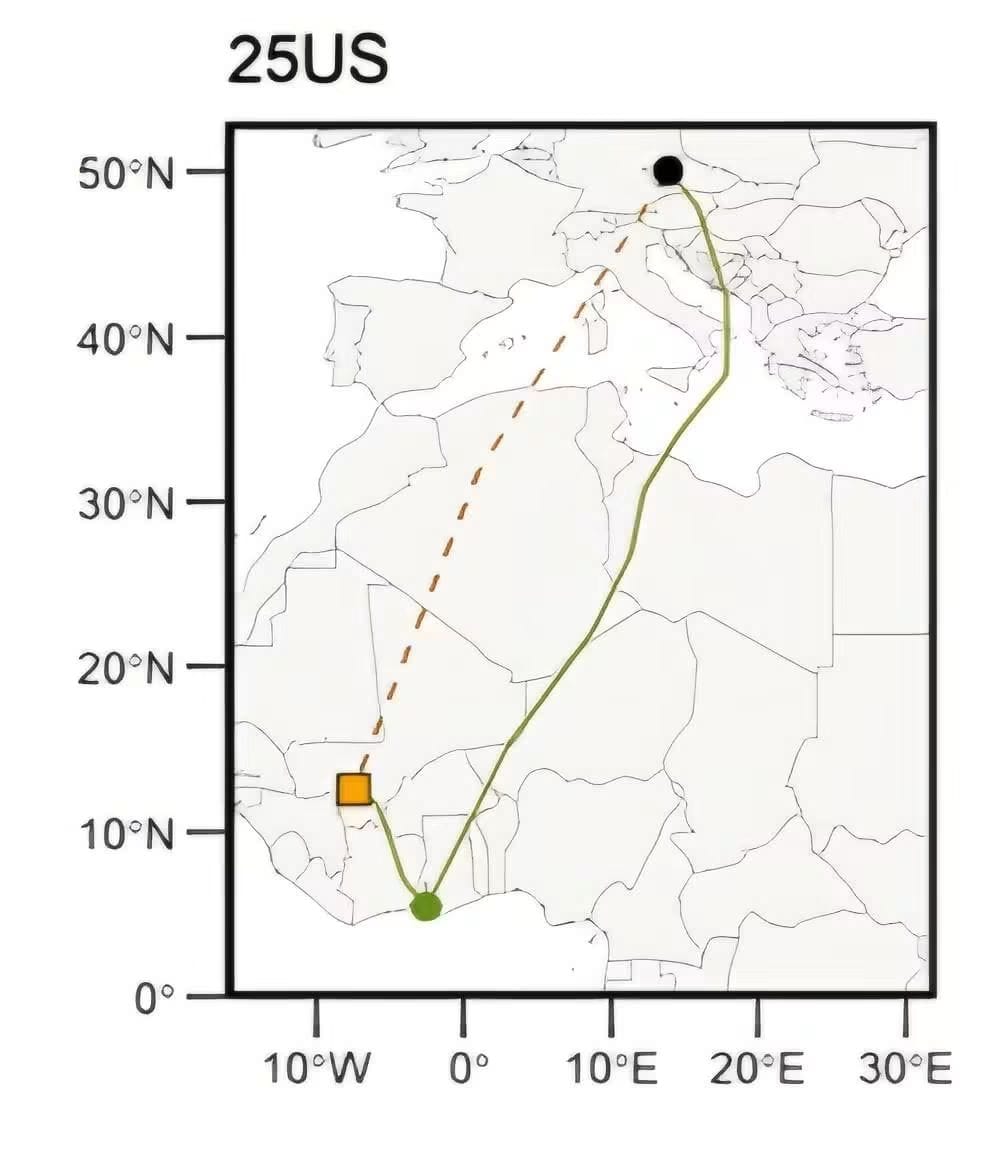
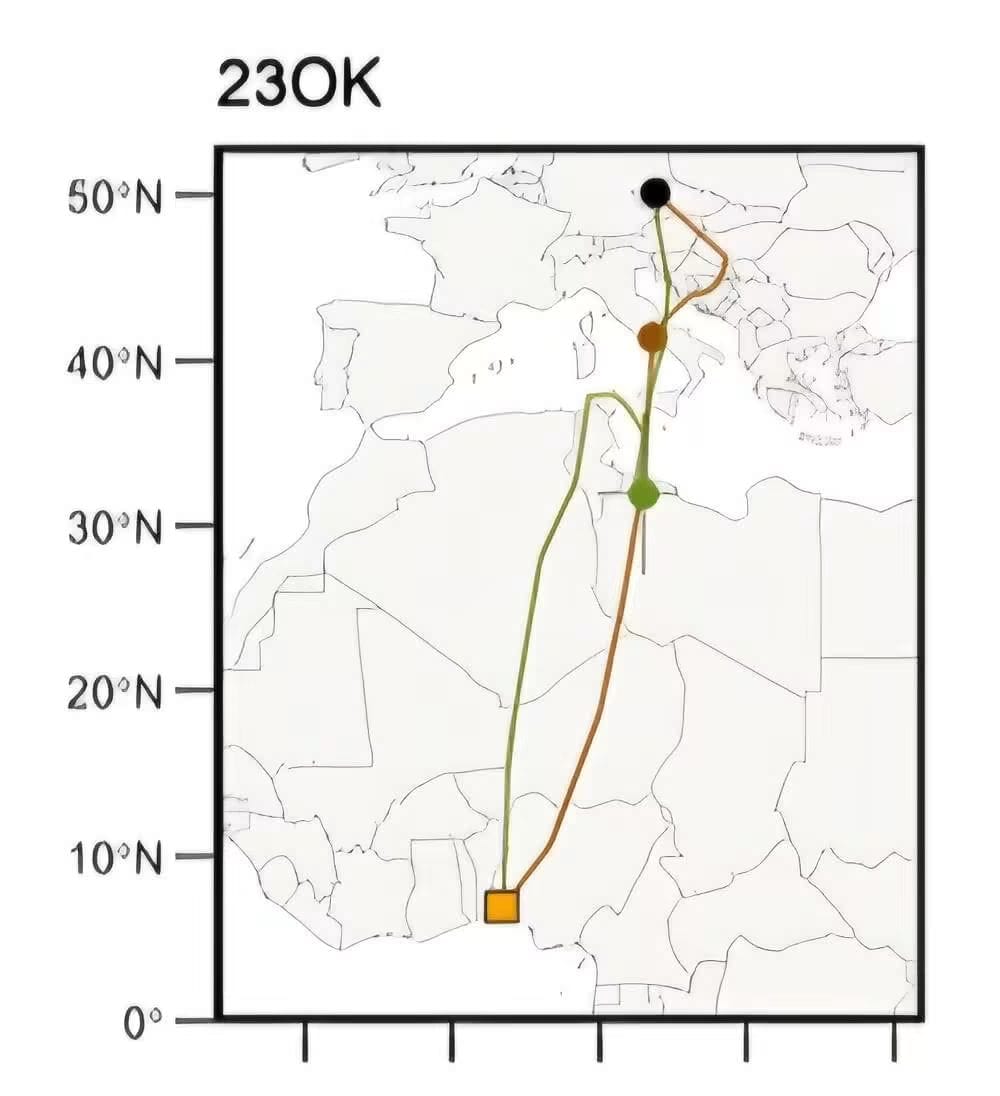
The tracking maps presented in the study show migration routes extending through the geographical range of Libya during both autumn and spring migration, with stopover locations also recorded within Libyan territory during the two migration periods.
This finding is particularly relevant to ornithological research in Libya, as the country lies within the North African region used by migratory birds travelling between their European breeding grounds and sub-Saharan African wintering areas.
The maps, particularly the tracks of individuals 230K, 25PX, and 25US, indicate that the birds crossed the Libyan region along different trajectories, with stopover locations appearing along some of these seasonal migration routes.
These findings highlight the need to strengthen migratory bird monitoring programmes in Libya, particularly in wetlands, plains, and other sites that may provide suitable stopover and feeding habitats during seasonal migration.
The Tree Pipit (Anthus trivialis) is recorded in Libya as a passage migrant, and the study provides evidence of its movement through and stopover within the Libyan region during both autumn and spring migration
Leave a Reply