


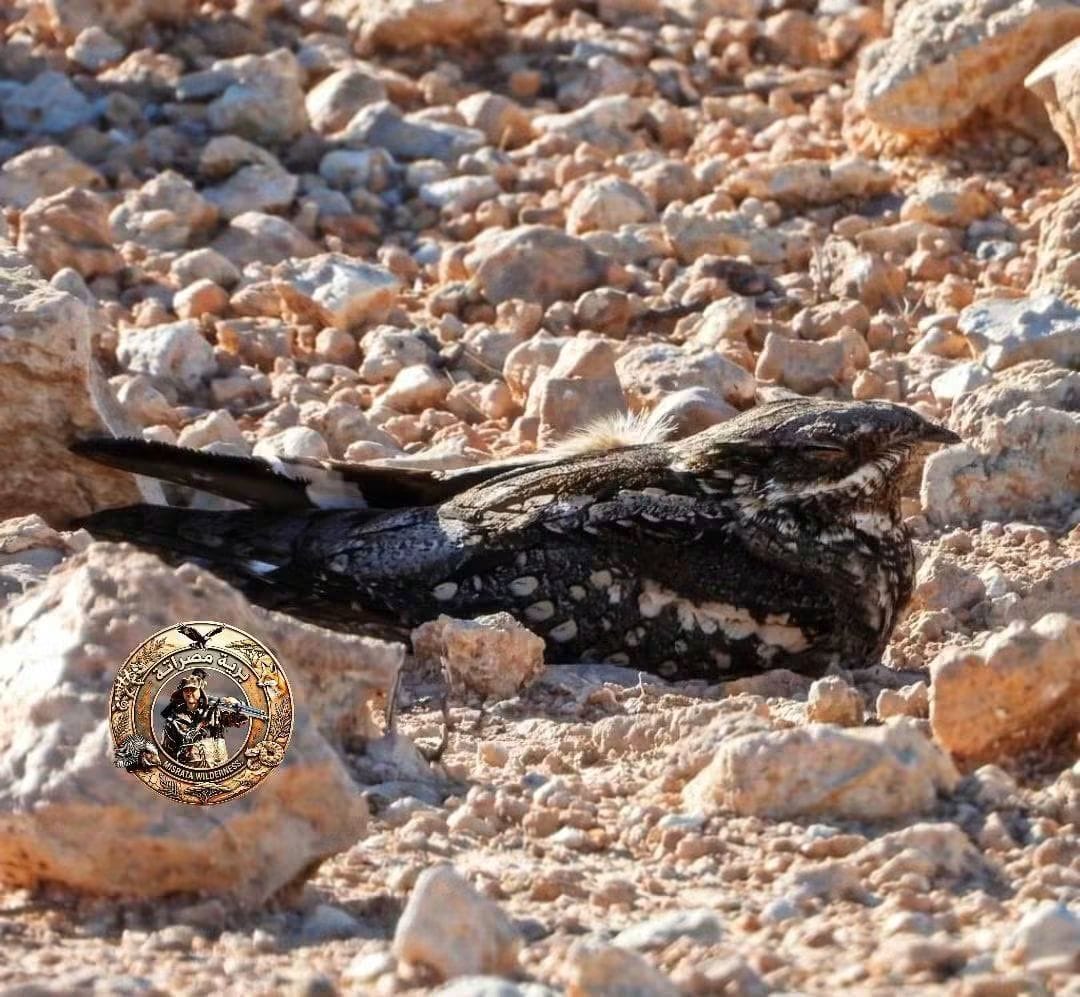


Scientific Study Reveals Migration Routes of the European Nightjar and Highlights Libya’s Potential Role Along the Europe–Africa Migration Route.
A scientific study published in 2025 in the journal Movement Ecology, titled “The spatial consistency and repeatability of migratory flight routes and stationary sites of individual European nightjars based on multiannual GPS tracks,” investigated the seasonal migration patterns, movement routes, stopover sites, and wintering areas of the European Nightjar (Caprimulgus europaeus), a long-distance migratory bird that travels between Europe and Africa.
The study focused on a population of European Nightjars breeding in southeastern Sweden, using miniature GPS tracking devices to investigate the birds’ movements throughout their annual cycles and to assess the consistency of their migration routes, breeding and wintering sites, and stopover areas.
The research included tracking data collected during breeding seasons from 2015 to 2022, allowing the researchers to compare individual movements across multiple years and examine variation in migration strategies.
Key findings:
🔹 Consistency in breeding and wintering sites:
The results showed that European Nightjars generally returned to similar breeding and wintering areas across different years, with relatively limited spatial variation between seasons.
🔹 Variation in migration routes:
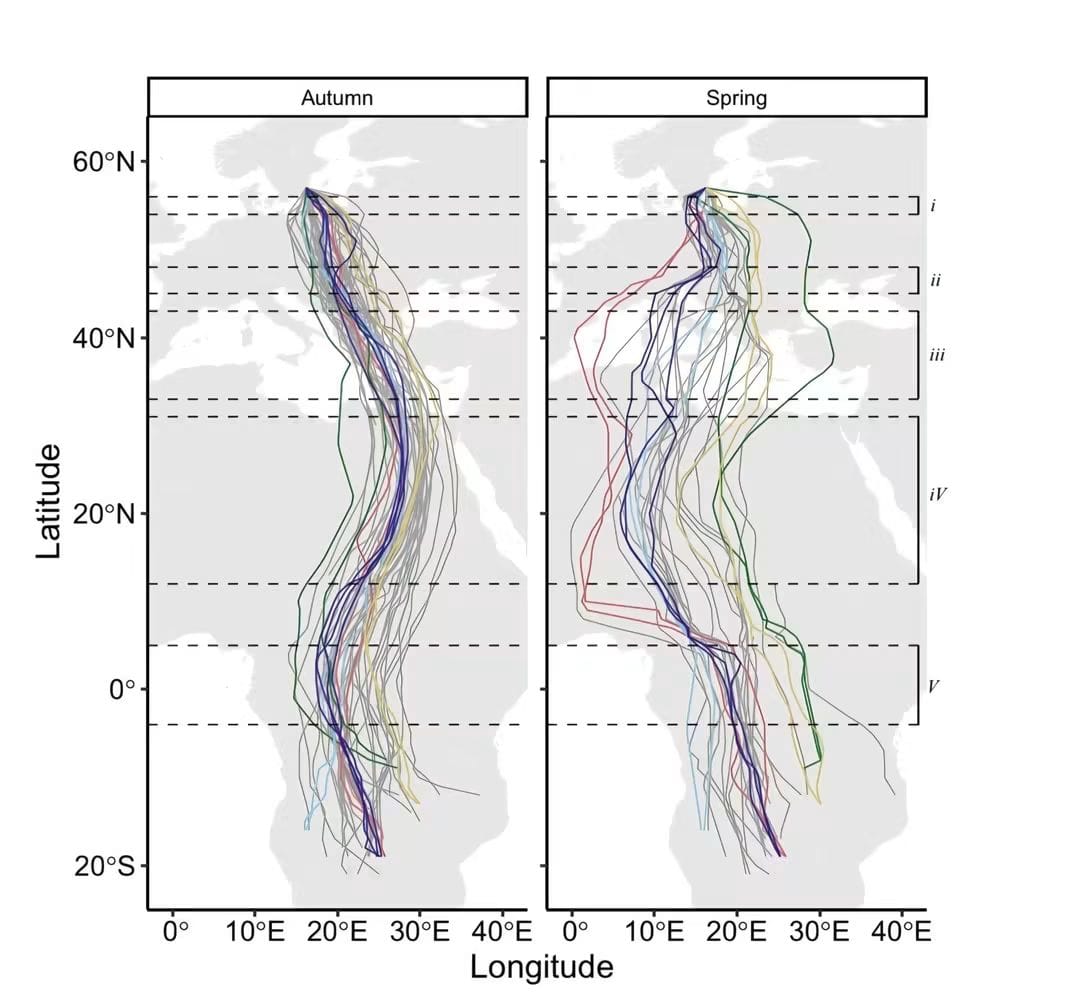
The birds did not necessarily follow the same route on every journey. Migration routes varied both among individuals and between years, particularly in the selection of stopover sites.
🔹 Repeatability of flight routes:
The study found a relatively high degree of route repeatability in some individuals. However, differences between birds were greater than the year-to-year variation observed within individual birds.
🔹 Influence of geographical barriers:
The results indicated that major geographical barriers, including the Baltic Sea, Mediterranean Sea, Sahara Desert, and Alps, can influence flight routes and the degree of variation in migratory movements.
🔹 Stopover areas before crossing major barriers:
Some birds tended to use stopover areas before crossing the Mediterranean Sea and Sahara Desert, which may allow them to build up energy reserves and prepare for crossing these extensive ecological barriers.
🔹 Role of environmental conditions and wind:
The researchers discussed the potential influence of wind conditions and previous migration experience on flight directions and stopover-site selection. These factors may help birds optimize their movements and reduce the energetic costs associated with migration.
Libya’s potential role along the migration route:
The migration maps presented in the study also show some routes extending across North Africa, within a geographical range that includes Libya or areas close to its territory. This highlights the potential importance of Libya’s geographical position for understanding migratory movements between Europe and Africa.
These findings further emphasize the importance of strengthening migratory bird monitoring programmes in Libya, documenting potential migration routes and stopover sites, and investigating the natural habitats used by migratory birds throughout their seasonal journeys, particularly along coastal areas, wetlands, and open habitats.
It is worth noting that the European Nightjar (Caprimulgus europaeus) is recorded in Libya as a passage migrant, passing through the country during both spring and autumn migration, without remaining in Libya to breed or spend the winter
Leave a Reply