




Scientific Study Reveals Eurasian Stone-curlew Migration Through Libya on Its Journey to Chad.
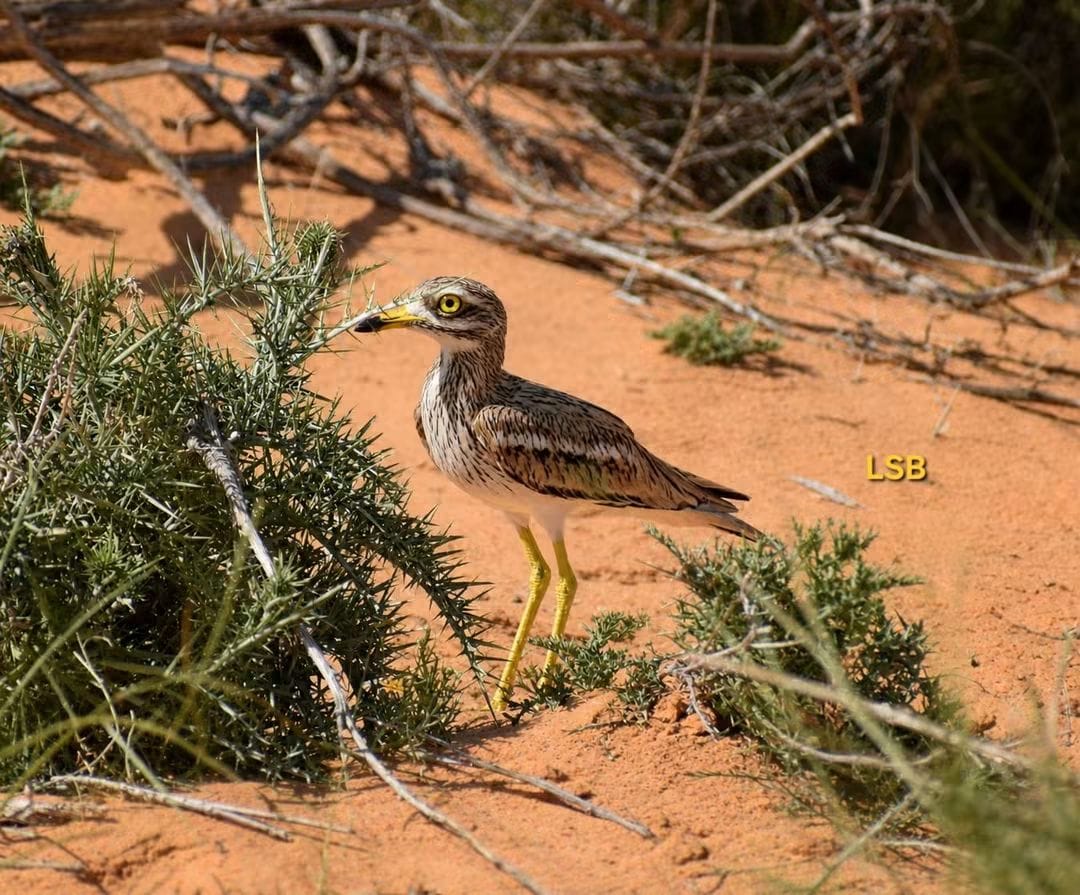
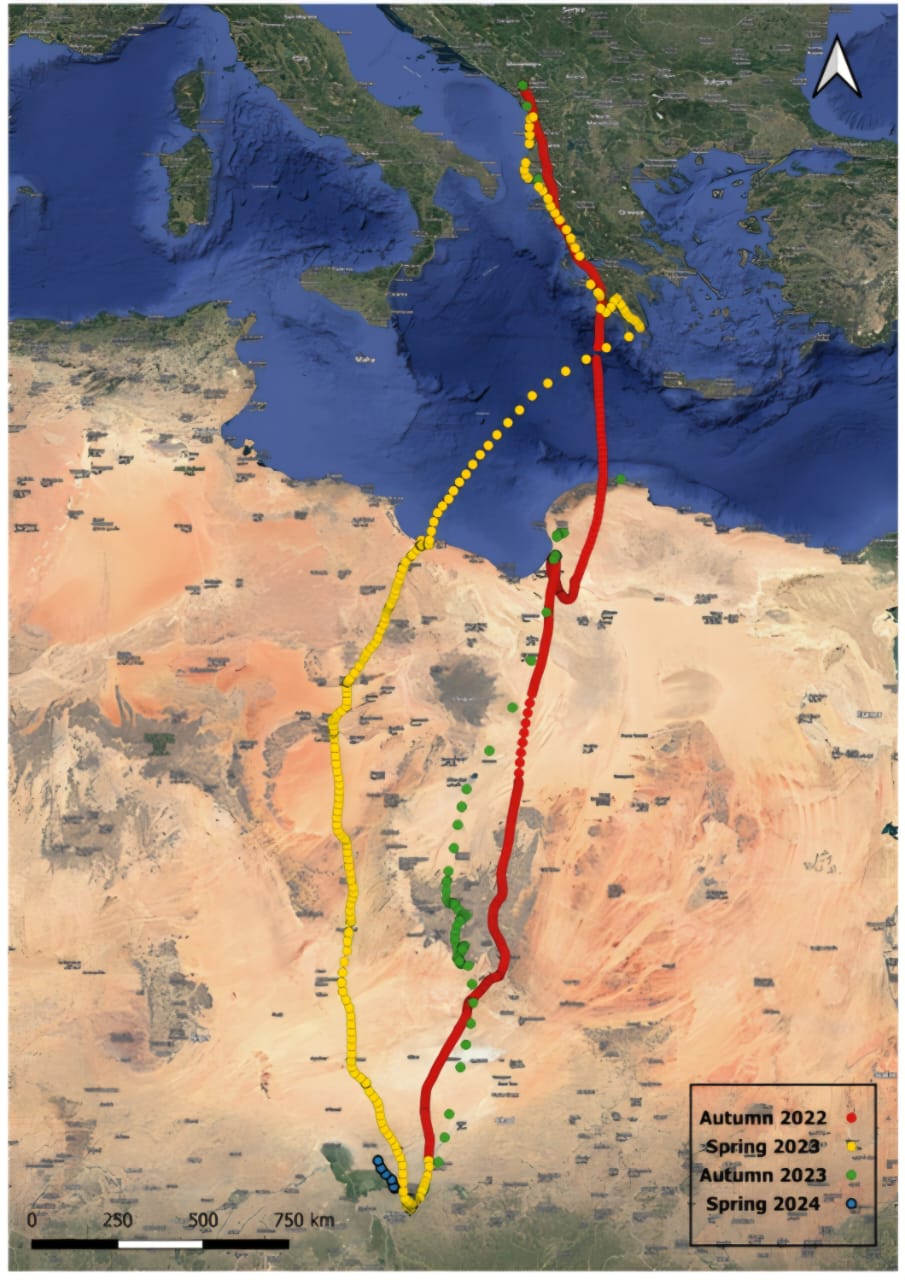
A GPS-tracking study has revealed the migratory route of a Eurasian Stone-curlew (Burhinus oedicnemus) breeding in Montenegro, showing that the bird crossed Libya during its southward migration to the Sahel region, where it spent the winter in Chad.
The tracking device was deployed on 2 June 2022, when an adult bird was captured within its breeding area at Ćemovsko polje, Montenegro, and fitted with an OrniTrack-10 solar-powered GPS transmitter operating through the GSM/3G network.
The bird was tracked for 662 days, generating data covering two autumn migrations and one spring migration. This allowed researchers to investigate its migration routes, stopover sites, flight distances, and breeding and wintering areas.
🔹 Key findings of the study:
- The bird completed three trans-Saharan migratory journeys during the tracking period.
- The longest recorded migration covered approximately 3,992 km.
- The longest migration lasted approximately 31 days.
- One migration route extended from Montenegro through Albania, Greece and Libya to Chad.
- The longest recorded continuous flight covered approximately 859 km and lasted for more than 10 hours.
- The bird reached a maximum ground speed of approximately 135 km/h.
- The maximum recorded altitude was approximately 2,770 m above sea level.
- The tracking device recorded temperatures of up to approximately 53°C in the bird’s wintering area in Chad.
- The bird returned to the same breeding area in Montenegro in successive years.
- It also returned to the same wintering area in Chad, indicating strong site fidelity throughout its annual cycle.
The findings are particularly relevant to Libya, as the tracking data demonstrate that Libyan territory forms part of the migratory route used by this bird between its breeding grounds in southeastern Europe and its wintering areas in the Sahel.
This provides further evidence of Libya’s importance within the network of bird migration routes connecting Europe and Africa, and highlights the value of continued GPS- and satellite-tracking studies for revealing migration routes that may be difficult to document through conventional field observations alone.
Such tracking data can also help identify important stopover sites, wintering areas, and migration corridors that may require further research and conservation attention.
The study recommends conducting additional tracking of Eurasian Stone-curlews to determine how frequently this route is used and to identify important sites along the species’ migratory pathway.
Source: Center for Protection and Research of Birds, Montenegro
It is worth noting that the Eurasian Stone-curlew (Burhinus oedicnemus) is recorded in Libya as a winter visitor and breeding resident.
Leave a Reply