


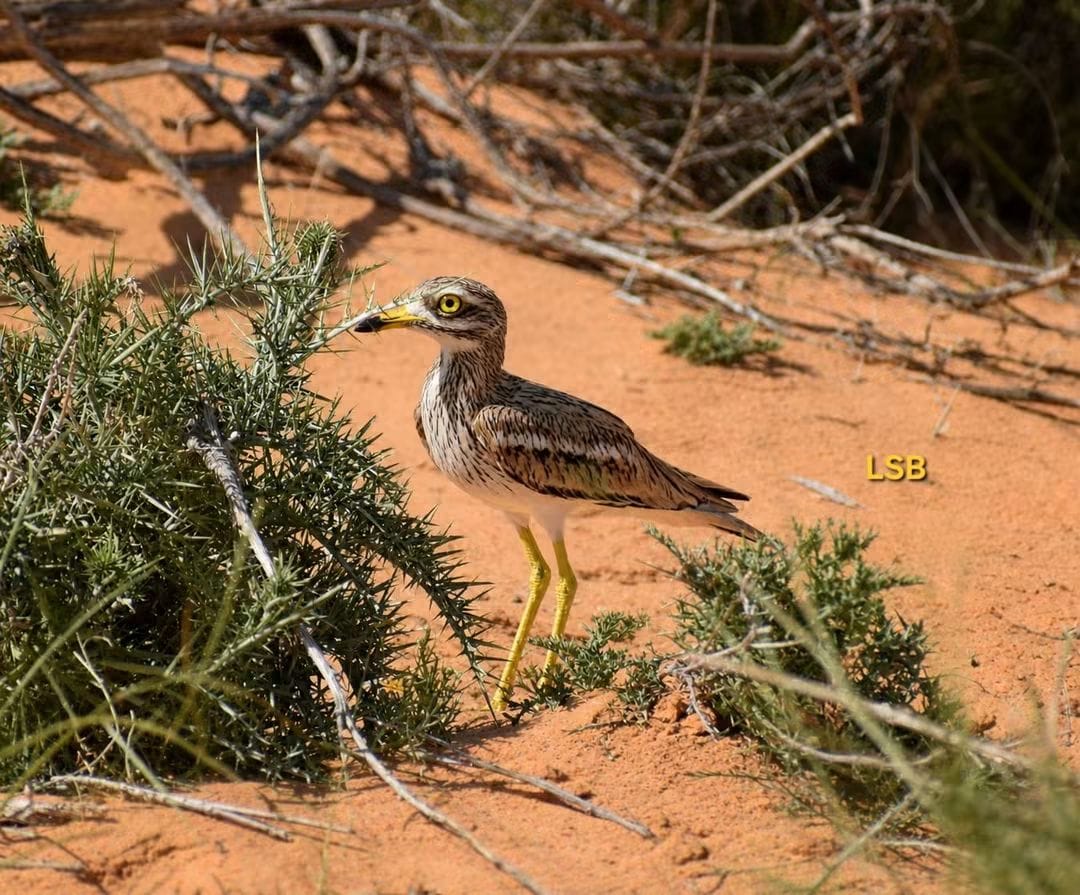


Scientific Study Highlights Libya’s Importance in the Migration of the Eurasian Stone-curlew (Burhinus oedicnemus).
Following our previous post on the migration of the Eurasian Stone-curlew (Burhinus oedicnemus) and its crossing of Libyan territory during its journey from southeastern Europe to Chad, we continue to highlight another scientific study revealing a different aspect of the species’ movements in the Mediterranean region.
The study, entitled “Inter- and intra-population variability of the migratory behaviour of a short-distance partial migrant, the Eurasian Stone-curlew – Burhinus oedicnemus,” was published in the Journal of Ornithology in 2022.
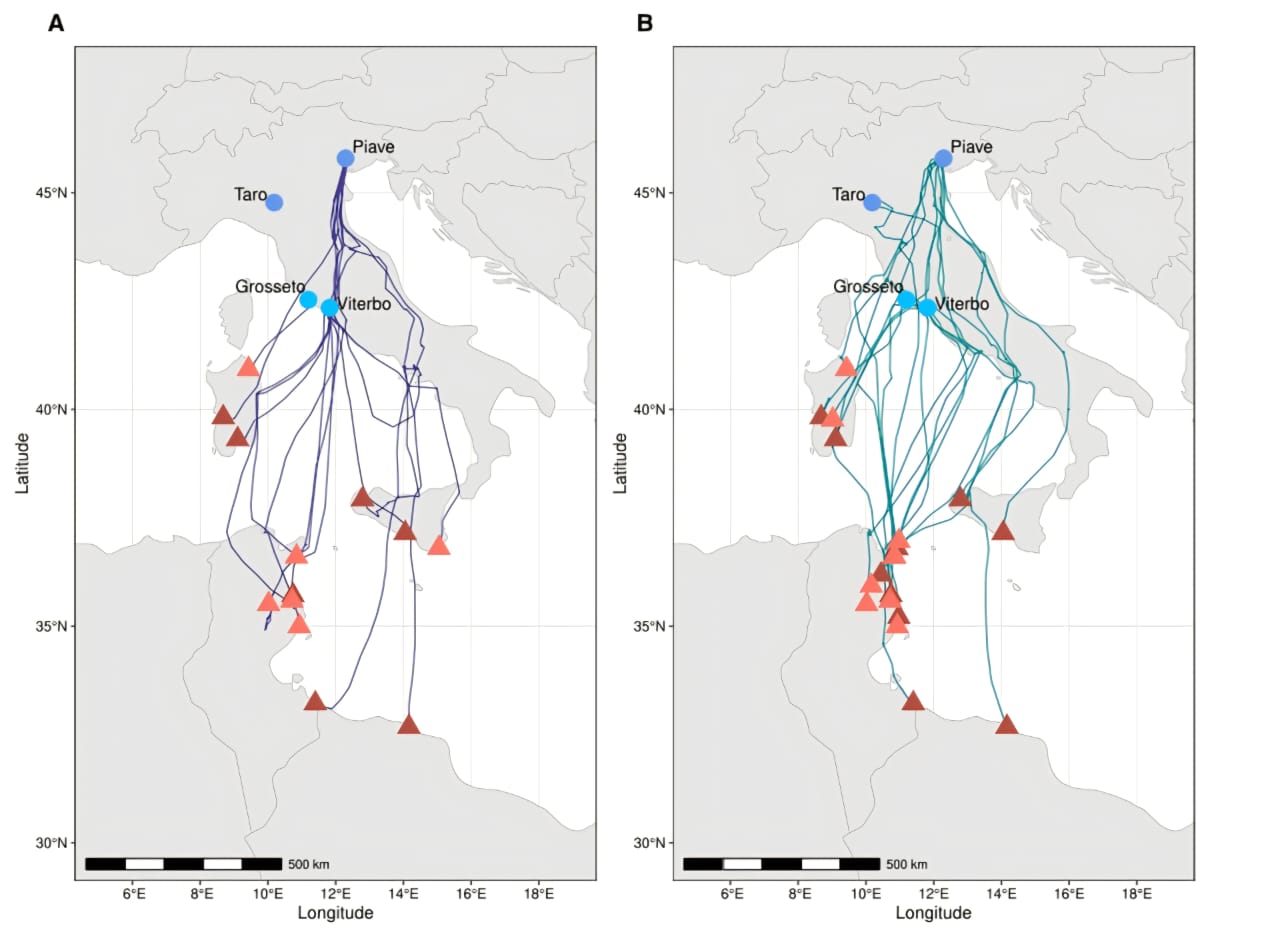
The study investigated variation in migratory behaviour both among and within populations of Eurasian Stone-curlews. Researchers tracked 40 birds from four Italian populations using geolocators and GPS-GSM tracking devices.
The study was conducted at four locations in Italy:
- Taro River, Parma Province, northern Italy
- Piave River, Treviso Province, northern Italy
- Grosseto Province, Tuscany, central Italy
- Viterbo Province, Lazio, central Italy
The birds were captured during the breeding season, between March and July, over the period 2013–2019.
🔹 Key findings
The study showed that the Eurasian Stone-curlew follows a partial migratory strategy, meaning that some individuals within a population migrate while others remain resident.
Among the GPS-tracked birds identified as migrants, researchers reconstructed 33 migration routes: 14 during autumn and 19 during spring.
Migration distances were relatively short, with birds travelling an average of less than 1,000 km in fewer than five days.
Most birds followed relatively direct and straight routes during both autumn and spring migration.
The birds spent the winter within the Mediterranean Basin, with wintering locations recorded in:
- Sardinia: 4 birds
- Sicily: 3 birds
- Tunisia: 12 birds
- Libya: 1 bird
The study also showed that the timing of migration was influenced by weather conditions, particularly temperature and wind.
The probability of autumn migration departure increased when temperatures approached or fell below 0°C, while favourable winds supporting southward movement were also associated with an increased likelihood of migration departure.
The researchers suggested that continued warming across the Mediterranean region could potentially lead to a reduction in the proportion of migratory individuals in some populations, which may in turn influence the species’ distribution throughout the year.
Why is this study important for Libya?
The significance of this study for Libya lies in its direct tracking-based evidence that Libyan territory is used as one of the wintering areas of the Eurasian Stone-curlew.
Thus, the two studies we have highlighted this week provide two different but complementary perspectives on the movements of this species:
🔹 The first study: documented a GPS-tracked Eurasian Stone-curlew from Montenegro crossing Libya during its migration towards Chad.
🔹 The second study: demonstrated that Libya was one of the wintering areas used by a tracked Eurasian Stone-curlew originating from Italian populations.
Together, these findings add to the growing body of scientific evidence demonstrating the importance of Libya within the movements of the Eurasian Stone-curlew across the Mediterranean and North African regions.
They also highlight the value of continued use of GPS tracking and other remote-tracking technologies to better understand bird movements and identify the sites and migration corridors that species rely on throughout their annual cycle.
Leave a Reply