


Common Myna in Libya: Rapid Expansion Calls for Early Monitoring and Action.
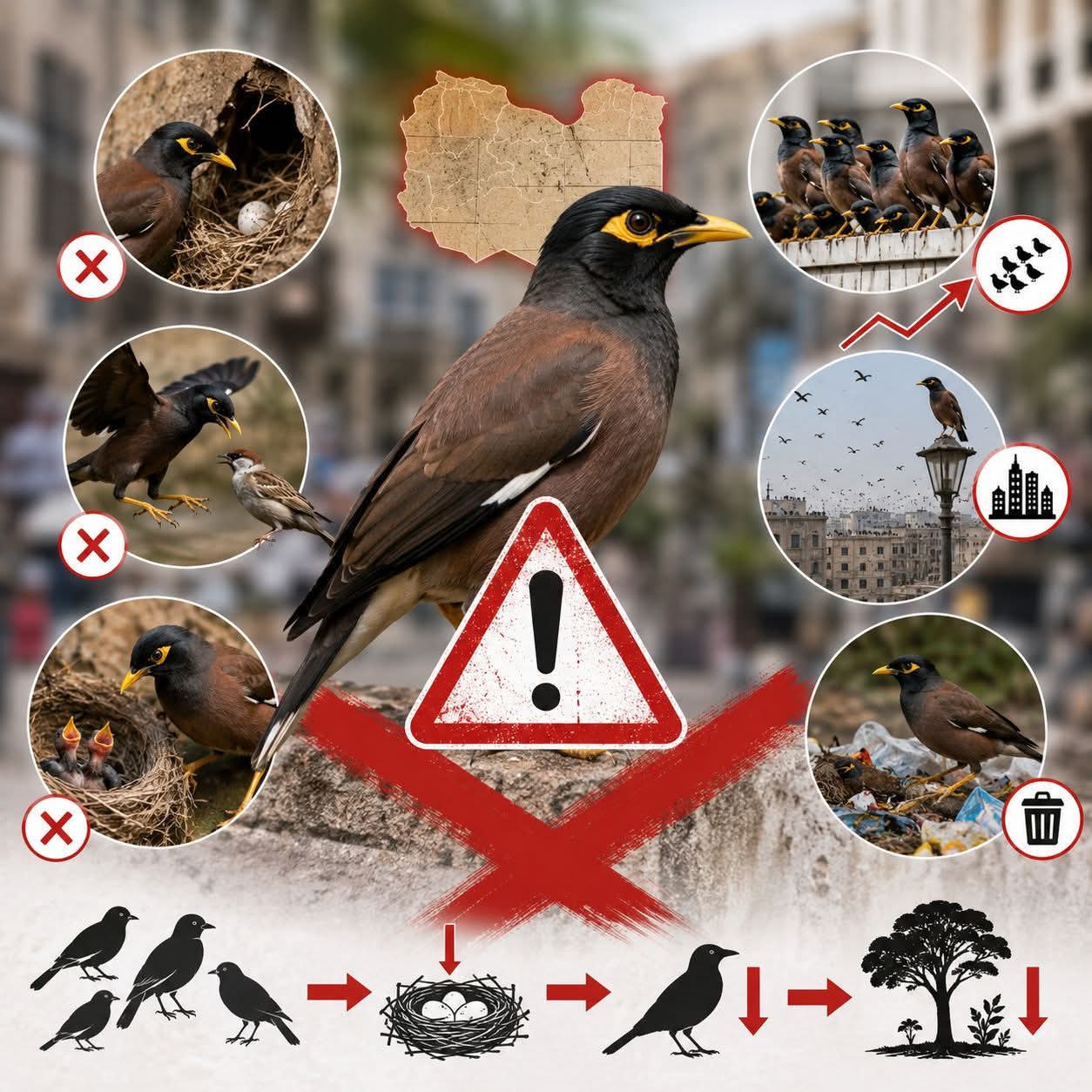
The Common Myna (Acridotheres tristis) is widely recognized as one of the world’s most successful invasive bird species. Its ability to adapt to urban and agricultural environments, reproduce rapidly, and compete with native species for food and nesting sites has contributed to its spread across many regions.
In Libya, the first published scientific record of the species came from Ain Zara, Tripoli, in 2024, where several individuals were observed, suggesting that the species had already established a local presence before its formal documentation (Etayeb & Elkrew, 2025).
Shortly afterward, another scientific study confirmed successful breeding of the Common Myna in Libya, documenting nests, breeding pairs, and juveniles in several locations, including Musaid, Tobruk, Benghazi, and Tripoli. These findings indicate that the species is expanding its range and becoming established across geographically distant parts of the country (Etayeb et al., 2025).
Experiences from other countries show that invasive species are most effectively managed during the early stages of their spread. Once established, control efforts become significantly more difficult and costly. The Common Myna has been associated with negative impacts on native birds through competition for food and nesting sites, occupation of nest cavities, and reduced breeding success of some local species.
The Libyan Society for Birds (LSB) therefore highlights the importance of:
- Strengthening monitoring programs across Libyan cities.
- Documenting new breeding and distribution records.
- Raising awareness about the impacts of invasive species on native biodiversity.
- Regulating the trade and keeping of non-native species and preventing their release into the wild.
- Developing a national early-management and control plan before the species becomes widespread.
LSB also encourages birdwatchers, researchers to report sightings of the Common Myna, including location, date, and photographs whenever possible. Such contributions can help build a national database to track its spread and assess its impact on native bird populations.
Protecting biodiversity is a shared responsibility, and early action today may help prevent greater environmental challenges in the future.
Leave a Reply