





GPS Tracking Study Reveals Osprey Migration Routes Across North Africa — Libya Lies Along a Migration Route
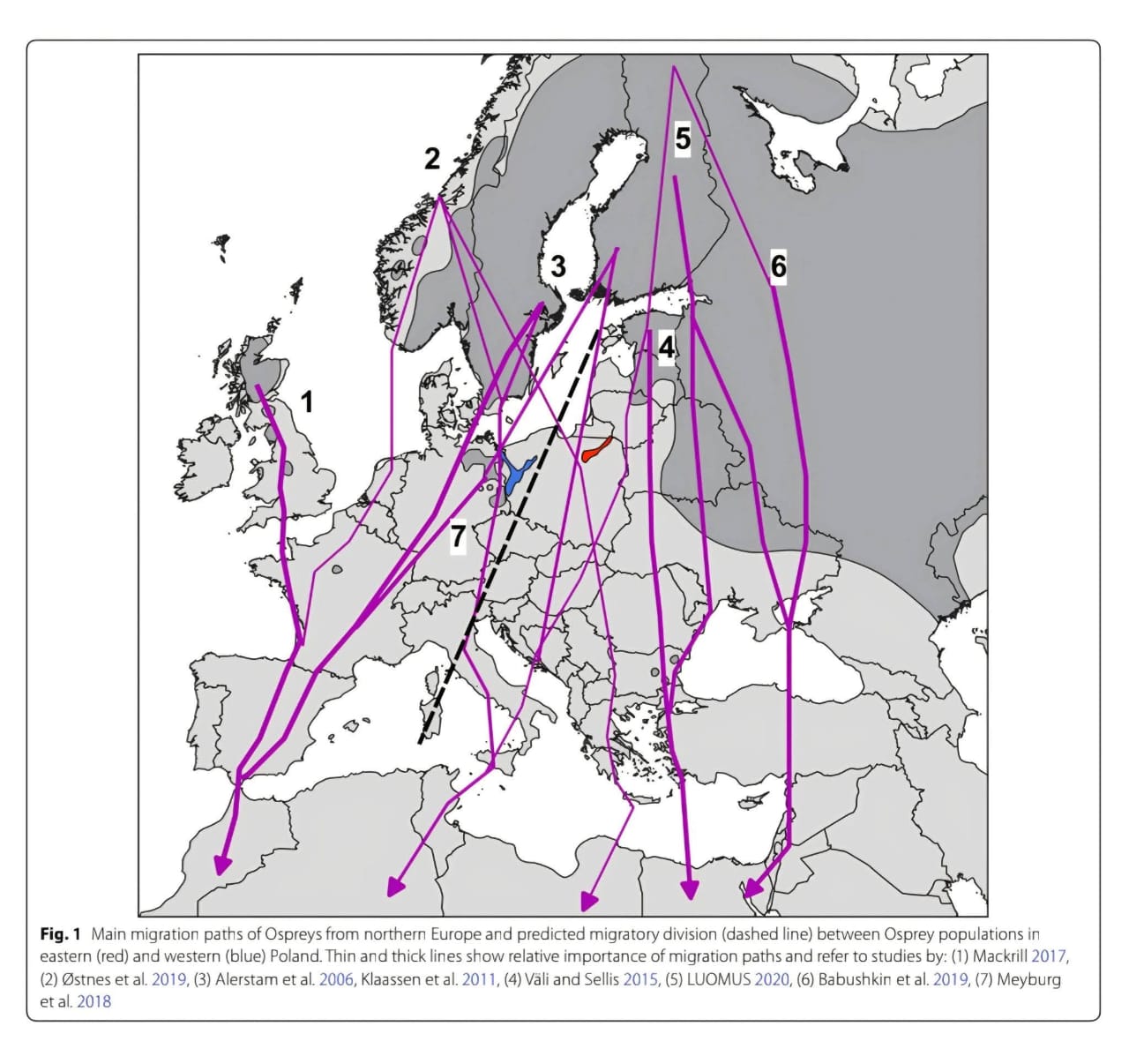
A scientific study published in Avian Research in 2021, entitled “Autumn migration of Ospreys from two distinct populations in Poland reveals partial migratory divide,” investigated differences in the autumn migration routes of two Osprey (Pandion haliaetus) populations in eastern and western Poland using GPS satellite tracking.
The researchers fitted 19 juvenile and adult Ospreys with GPS tracking devices between 2017 and 2020 and monitored their autumn migration.
Key findings
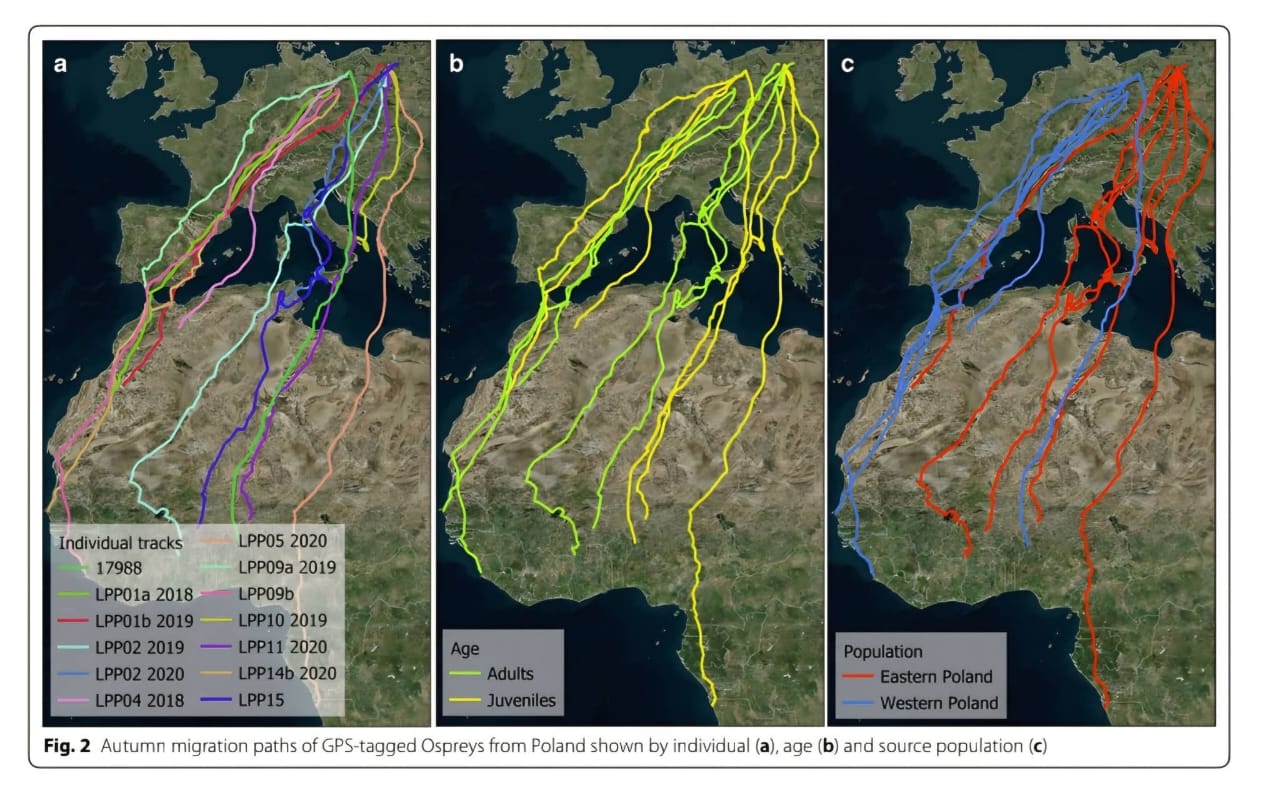
The results revealed a partial separation between the migration routes of the two populations.
Most birds from the eastern population travelled southwards, whereas those from the western population showed a stronger tendency to migrate southwest. The two populations also used different routes to cross the Mediterranean Sea.
The tracking maps published in the study show migration routes extending southwards across North Africa, with one route passing geographically through Libya before continuing further south.
The tracked birds reached several wintering areas across Africa, including Nigeria, Senegal, Burkina Faso, Ghana, Angola and Sierra Leone. One individual travelled to Spain instead of continuing to Africa.
Tracking signals were also lost for some birds in Algeria, Tunisia, Morocco and Italy, although the reasons for signal loss could not be confirmed in every case.
Of the 19 Ospreys fitted with GPS devices, autumn migration routes were successfully obtained for 12 individuals.
Long-distance flights and migration patterns
The tracked birds demonstrated a remarkable capacity for long-distance travel, with individuals from both age groups covering approximately 800 km in 24 hours.
Birds from the eastern population travelled longer distances during migration than those from the western population. The difference approached statistical significance, despite the direct distances between their breeding and wintering areas being similar.
The difference in total route length was particularly evident over the Mediterranean Sea and the Sahara Desert, where birds from the eastern population travelled greater distances.
Some juvenile birds also exhibited longer stopovers and more pronounced stopover-site use than adults, suggesting differences in migration behaviour between age groups.
Mortality and threats during migration
The study reported minimum confirmed annual mortality rates of at least 67% among juveniles and 57% among adults.
Recorded causes of mortality included:
- Predation by the Northern Goshawk (Accipiter gentilis).
- Electrocution.
- Illegal hunting.
- Wind turbines.
- Unknown causes.
These findings highlight the considerable risks Ospreys may face during migration and the importance of identifying and reducing threats along their migratory routes.
Why is this study important for Libya?
The study adds to the growing body of evidence highlighting Libya’s geographical position within the network of migratory bird routes connecting Europe and Africa.
Its tracking maps illustrate the importance of North Africa and the Sahara Desert for migratory birds and show how differences in migration routes can affect total travel distances and exposure to potential threats.
GPS tracking provides a valuable tool for identifying migration pathways that may not be detected through field observations alone. Such information can help researchers and conservation organisations identify important migration corridors and improve understanding of the threats facing birds as they travel between continents.
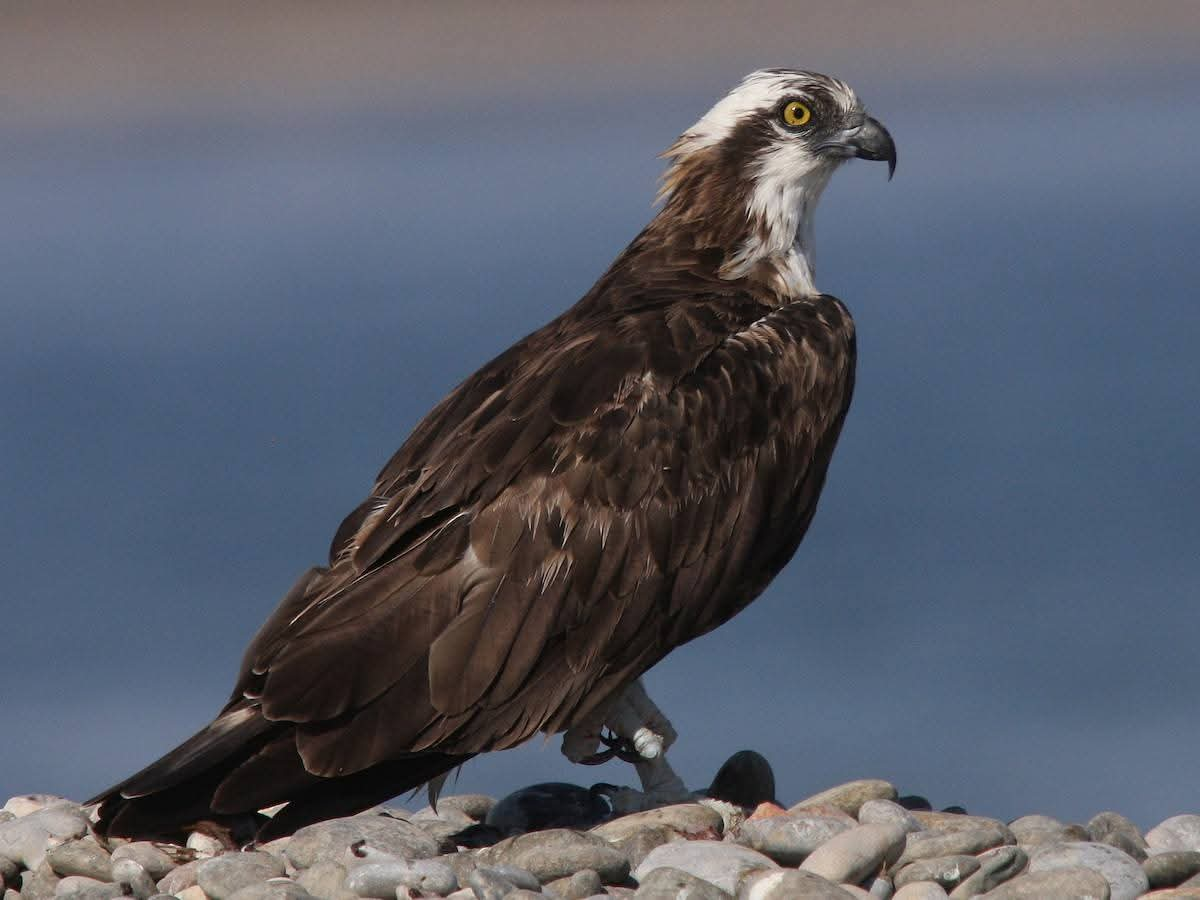
The Osprey (Pandion haliaetus) is recorded in Libya as both a winter visitor and a passage migrant, making further monitoring of its movements through the country particularly relevant to bird conservation.
Bird photographs: eBird
GPS tracking maps: Anderwald et al. (2021)
Leave a Reply