




Scientific Study Reveals Diverse Migration Routes of Black-tailed Godwits (Limosa limosa), with Libya Along One of the Migration Routes.
A scientific study published in the journal Ardea in 2019, entitled:
“Individual Black-tailed Godwits do not stick to single routes: a hypothesis on how low population densities might decrease social conformity”
investigated the migration timing and routes of Black-tailed Godwits (Limosa limosa) breeding in eastern Poland, focusing on variation in route selection among individuals and between migration years.
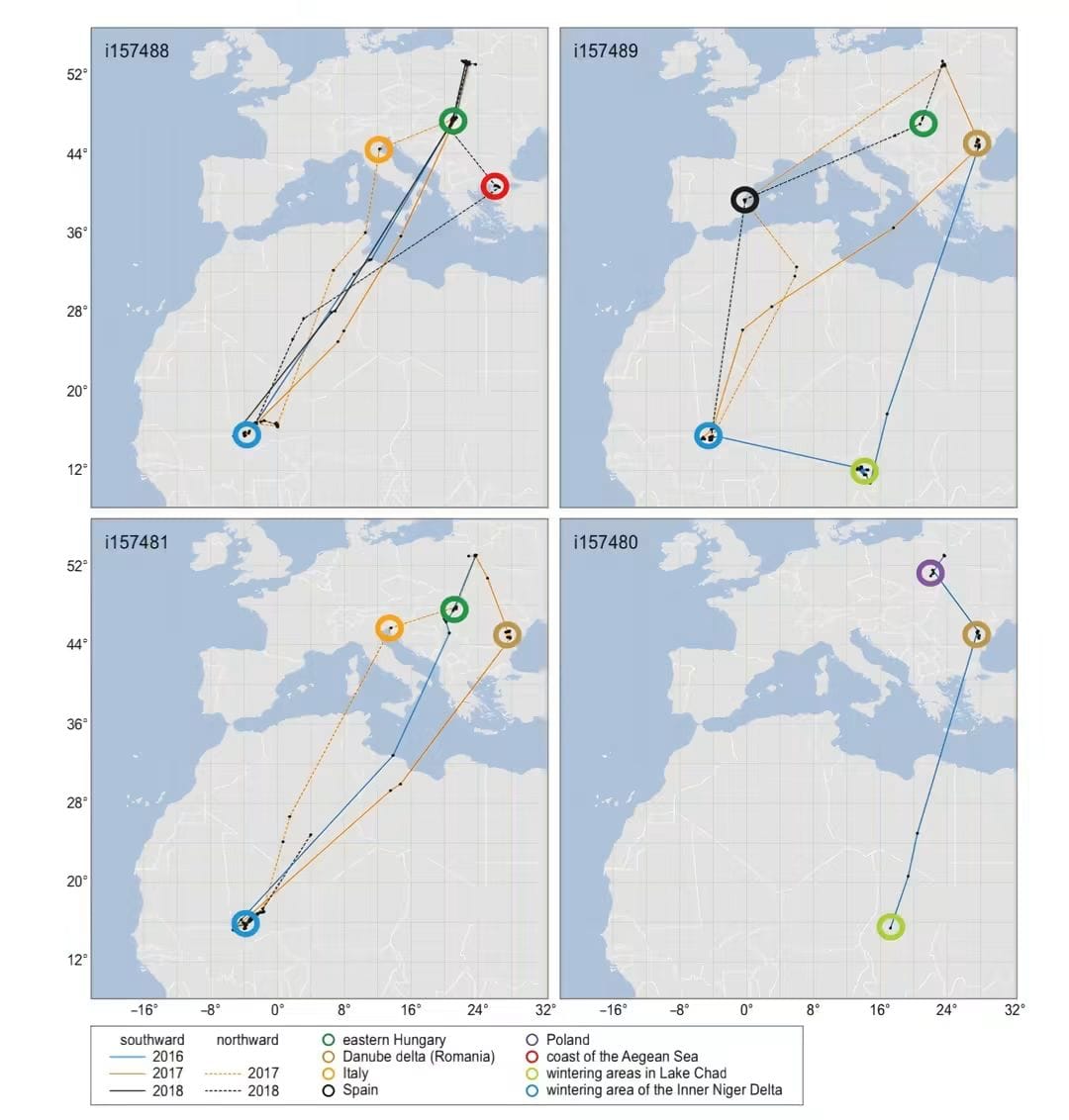
During the 2016 breeding season, researchers captured and equipped four adult Black-tailed Godwits in eastern Poland with tracking devices. The birds were subsequently monitored across several migration seasons, providing data on three consecutive autumn migrations in 2016, 2017, and 2018, as well as two spring migrations in 2017 and 2018.
The researchers used small solar-powered tracking devices to determine migration timing and routes, stopover locations, and wintering areas. The data from the Polish breeding population were also compared with previously published tracking data from Black-tailed Godwits belonging to the Dutch breeding population.
The study revealed considerable variation in migration routes among individuals from the same breeding population. Rather than consistently following a single migration route, individual birds showed substantial flexibility in their route choices between migration seasons.
During autumn migration, three major migration routes were identified, leading to wintering areas in Africa.
During spring migration, three different routes were identified as the birds returned to their breeding grounds in Poland.
Importantly, birds tracked over more than one migration season did not consistently follow the same route during either autumn or spring migration. Instead, route selection varied both among individuals and between years.
The map illustrates migration routes passing through Libya during the journeys between European breeding grounds and wintering areas south of the Sahara.
These findings add to the growing body of evidence highlighting the importance of North Africa, including Libya, within the wider Europe–Africa migratory network. They also emphasize the need to strengthen monitoring of migratory birds across different parts of Libya, particularly wetlands, coastal areas, open plains, and other sites rich in food resources that may serve as important stopover habitats during long-distance migration.
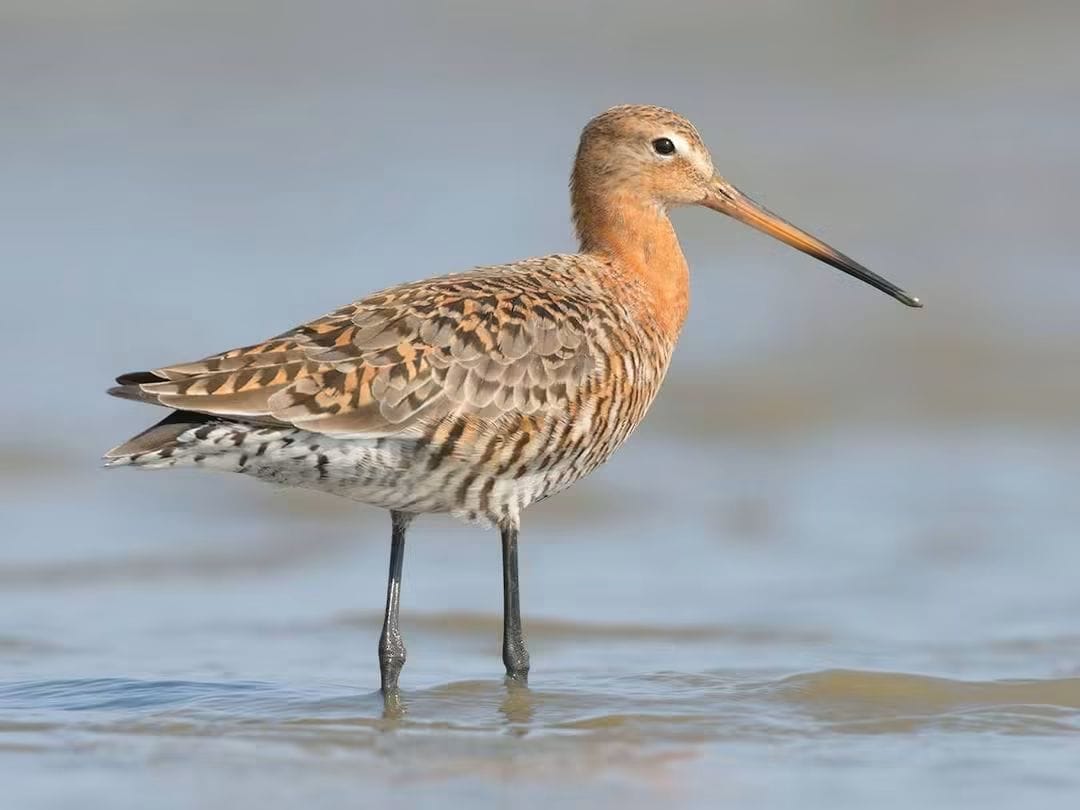
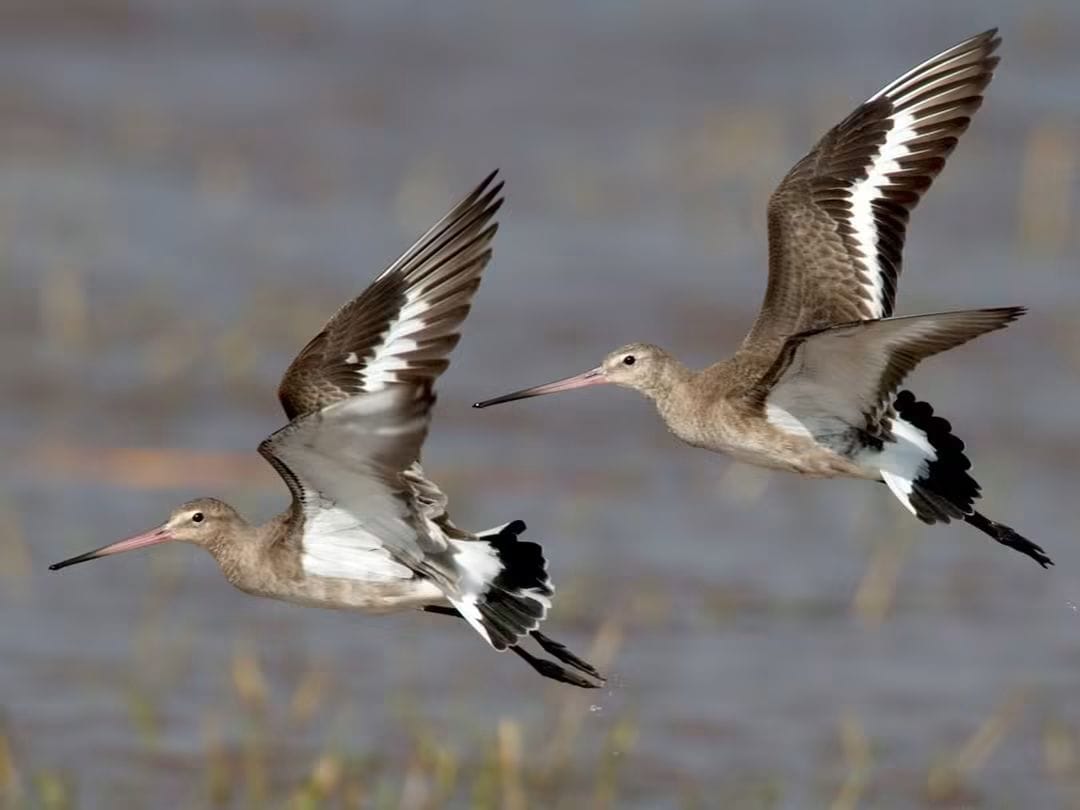
The Black-tailed Godwit (Limosa limosa) is recorded in Libya as both a winter visitor and passage migrant. According to the IUCN Red List, the species is currently classified as Near Threatened (NT).
📸 Photo: eBird
Leave a Reply