




New Global Study: 51% of Migratory Bird Species Are Declining, While 189 Bird Species Have Gone Extinct Since 1500.
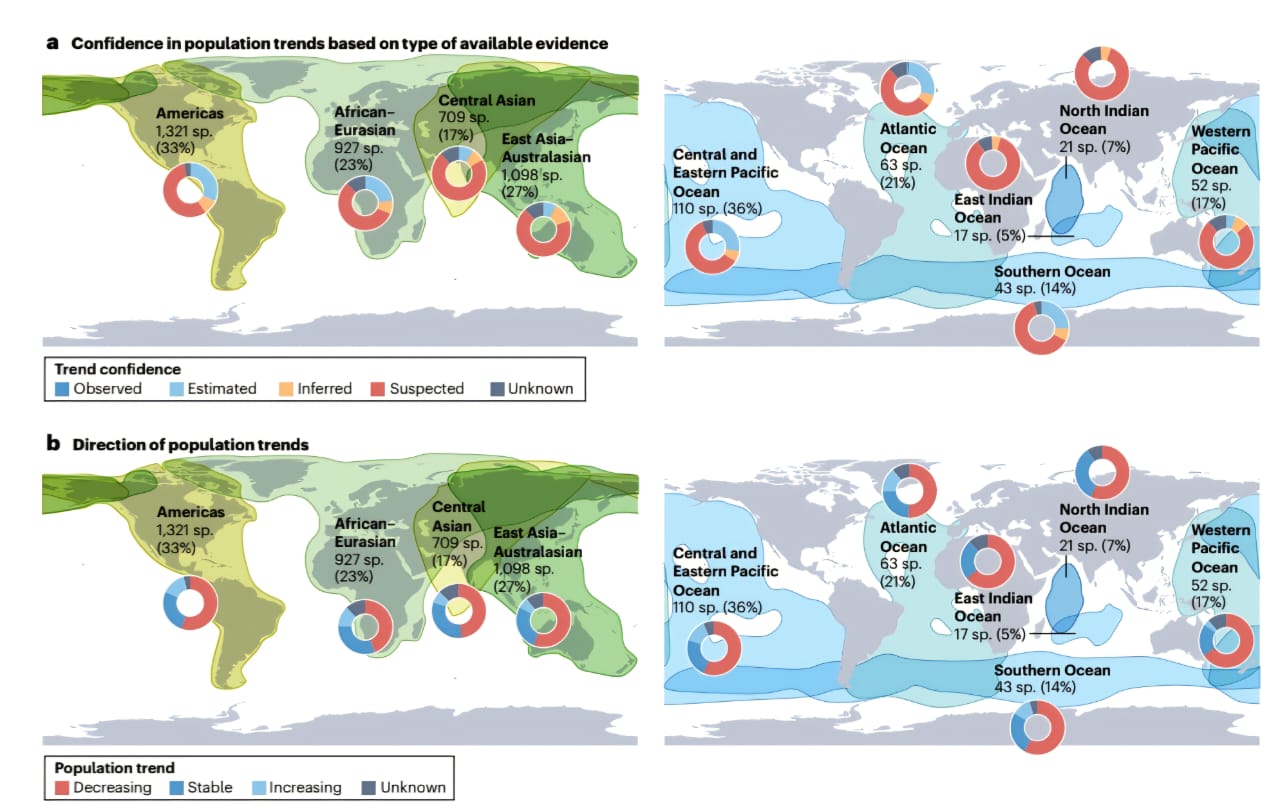
A new global study published in July 2026 in Nature Reviews Biodiversity reveals that migratory birds are facing an escalating conservation crisis. The study found that 51% of the world’s migratory bird species are experiencing population declines, warning that ongoing threats could drive many more species toward extinction unless stronger conservation measures are implemented.
According to the study, the world is home to approximately 3,382 migratory bird species, representing nearly 31% of all bird species globally. The authors also identified taxonomic discrepancies involving around 1,966 species across major global databases, highlighting the need for improved monitoring programs and greater harmonization of migratory bird datasets.
The assessment showed that:
- 51% of migratory bird species are declining.
- 31% have stable populations.
- 10% are increasing.
- 8% lack sufficient data to determine population trends.
The study further reported that 189 bird species have become extinct—or are presumed extinct—since the year 1500, including an estimated 8–16 migratory species. The most recent example is the Slender-billed Curlew (Numenius tenuirostris), which was officially declared extinct in 2025.
Regarding extinction risk, the authors found that 9% of migratory bird species are globally threatened with extinction, including 43 species classified as Critically Endangered.
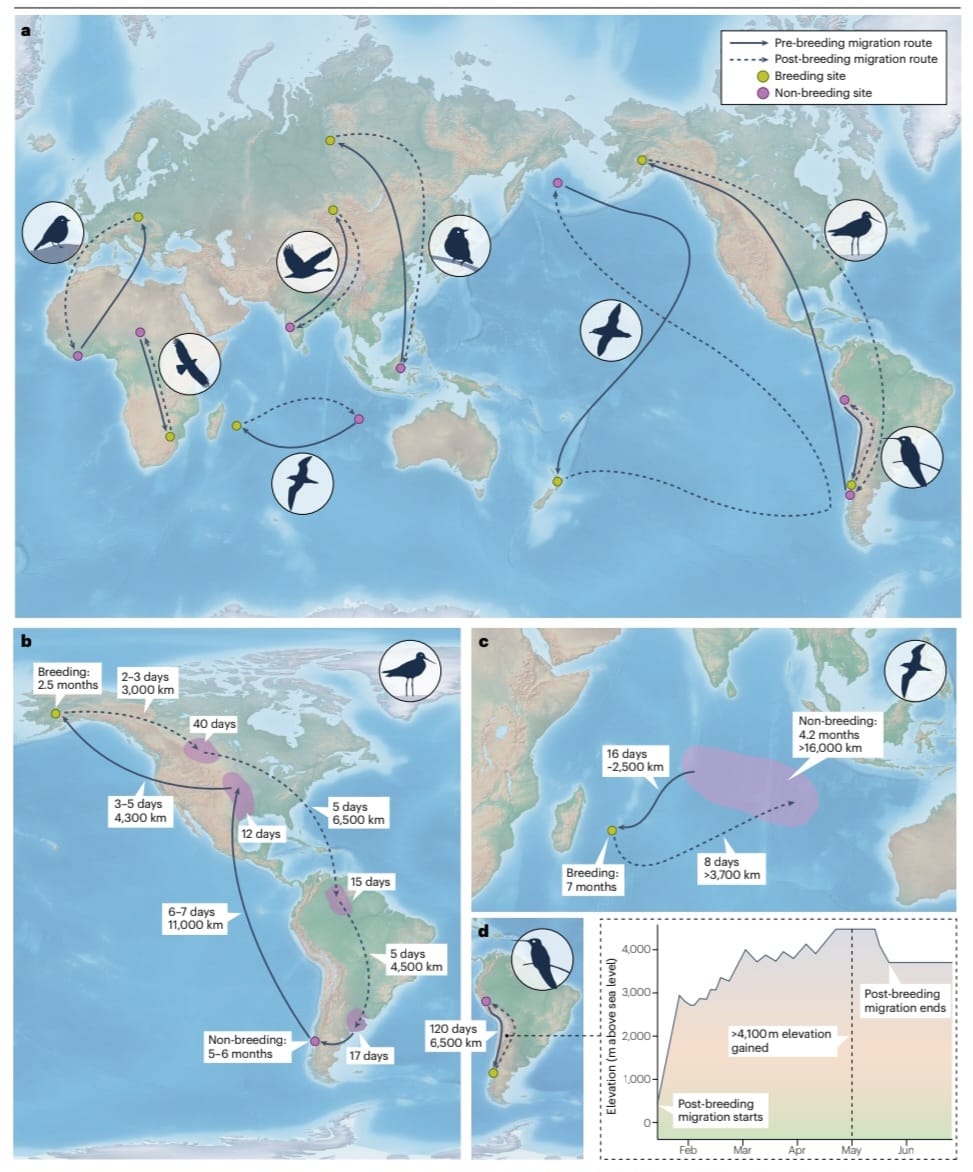
Population declines also vary among habitats. Approximately 70% of forest-associated migratory birds are declining, while declines affect 44–56% of species migrating along terrestrial flyways and 51–65% of those using marine flyways, underscoring the severe pressures facing seabirds.
The study identifies the principal threats to migratory birds as habitat loss and degradation, climate change, unsustainable hunting and trade, collisions with buildings, power lines and other infrastructure, pollution and agricultural pesticides, invasive alien species, and diseases such as avian influenza.
The authors also note that free-ranging domestic cats and collisions with buildings each kill more than one billion birds annually in the United States and Canada. In addition, threats such as bycatch in commercial fisheries, invasive species, and climate change affect an estimated 200 million seabirds worldwide.
To reverse these trends, the researchers recommend expanding long-term monitoring programs, increasing the use of tracking technologies and artificial intelligence, protecting breeding, stopover, and wintering sites, reducing illegal hunting, mitigating infrastructure-related mortality, controlling invasive species, strengthening international cooperation, and securing sustainable funding to support the implementation of global agreements for the conservation of migratory species.
Leave a Reply