





Scientific Study Reveals Frequent Stops During Montagu’s Harrier Migration Between Europe and Africa, Highlighting the Importance of North African Migration Routes
In 2017, the scientific journal Journal of Avian Biology published a study entitled “Migrating Montagu’s harriers frequently interrupt daily flights in both Europe and Africa.”
The study aimed to investigate the migratory behaviour of Montagu’s Harrier (Circus pygargus) during its journeys between Europe and Africa, examining the frequency and nature of stops during daily migration flights and the environmental factors influencing the birds’ movements.
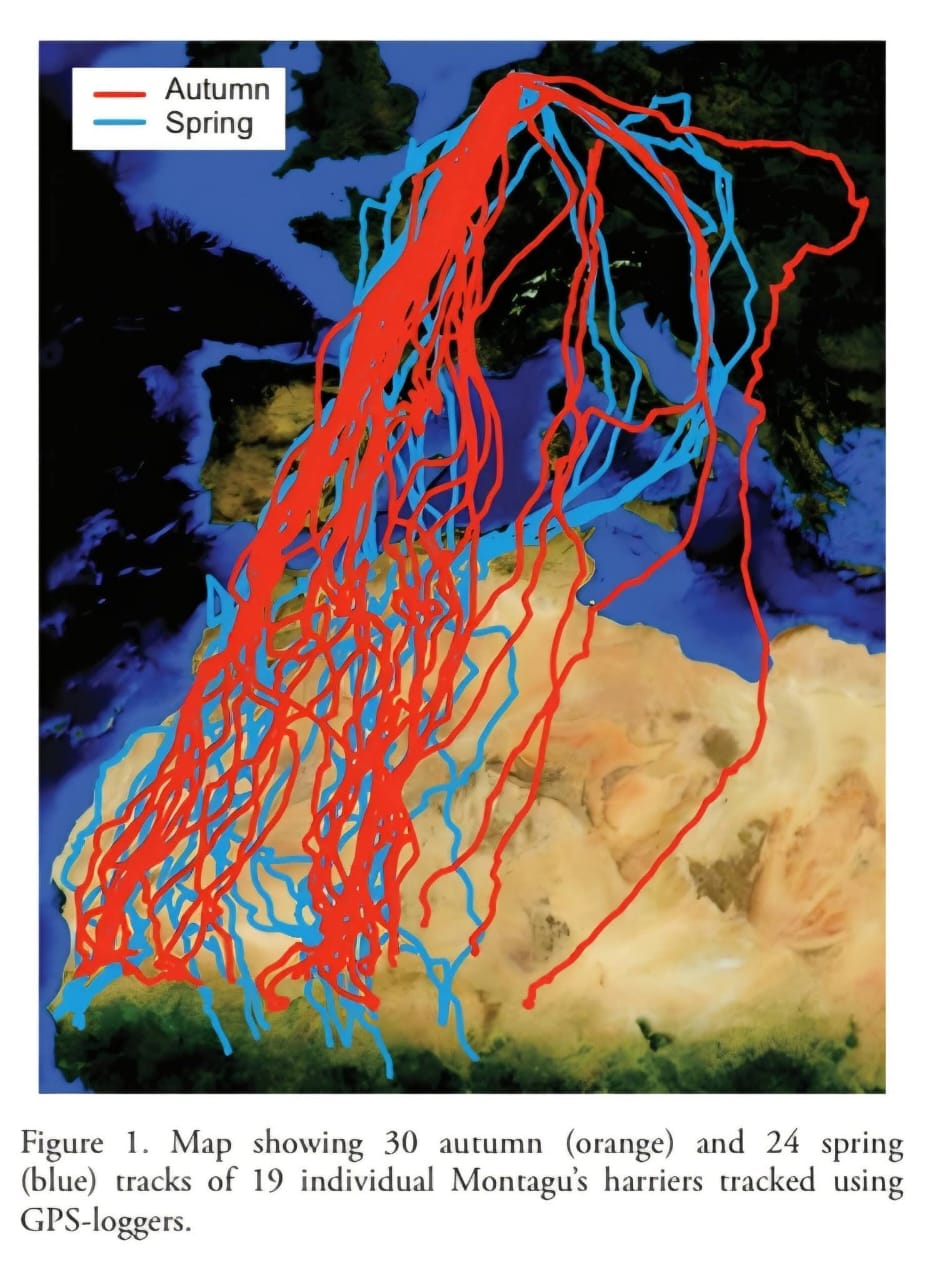
Researchers used GPS tracking devices to monitor 19 individuals, obtaining 54 migration tracks covering both autumn and spring journeys. These data allowed them to analyse movement patterns and daily stopovers across different migration regions.
Key findings
🔹 Frequent stops during migration: The data showed that birds interrupted their flights on approximately 78% of the migration days analysed, with an average of around 1.5 hours spent stopped each day.
🔹 Foraging and resting: Approximately 41% of stops involved movement by the birds, which the researchers interpreted as likely foraging activity. Around 32% were associated with birds remaining at particular locations, potentially indicating resting behaviour.
🔹 Stops within the Sahara Desert: The study recorded stops potentially associated with foraging within the Sahara, suggesting that some desert areas may provide useful resources for migrating birds rather than serving solely as geographical barriers.
🔹 The influence of wind: Tailwinds were associated with longer daily flight distances and fewer stops. In contrast, headwinds were associated with increased resting periods, possibly as birds waited for more favourable weather conditions.
🔹 Differences in daily distances: The birds covered longer daily distances in Africa than in Europe, despite similarities in the overall time allocated to flight and stopping in some of the comparisons made by the researchers.
What does this study tell us about Libya?
The tracking map illustrates Montagu’s Harrier migration routes between Europe and Africa across the Mediterranean region and North Africa, including Libya. These routes highlight the importance of the region for understanding migratory movements and the needs of birds during their long journeys.
The study demonstrates that understanding bird migration involves more than mapping routes and measuring distances. It also requires identifying stopover sites, understanding foraging and resting behaviour, and examining how weather conditions influence birds’ decisions throughout their journeys.
For Libya, continued monitoring of migratory raptors and the habitats they use during passage can contribute to a better understanding of migration patterns and help identify areas that may be important for their conservation.
📷 Bird photograph: eBird
Leave a Reply