




A Tracking Study Reveals the Migration Routes of the Common Swift (Apus apus) Between Europe and Africa, with Libya Along One of the Routes
In 2012, the scientific journal PLOS ONE published a study entitled “Migration Routes and Strategies in a Highly Aerial Migrant, the Common Swift Apus apus, Revealed by Light-Level Geolocators.”
The study aimed to investigate the migration routes and strategies of the Common Swift (Apus apus), a species renowned for spending much of its life on the wing. Researchers used light-level geolocators to track the birds’ movements between Europe and Africa.
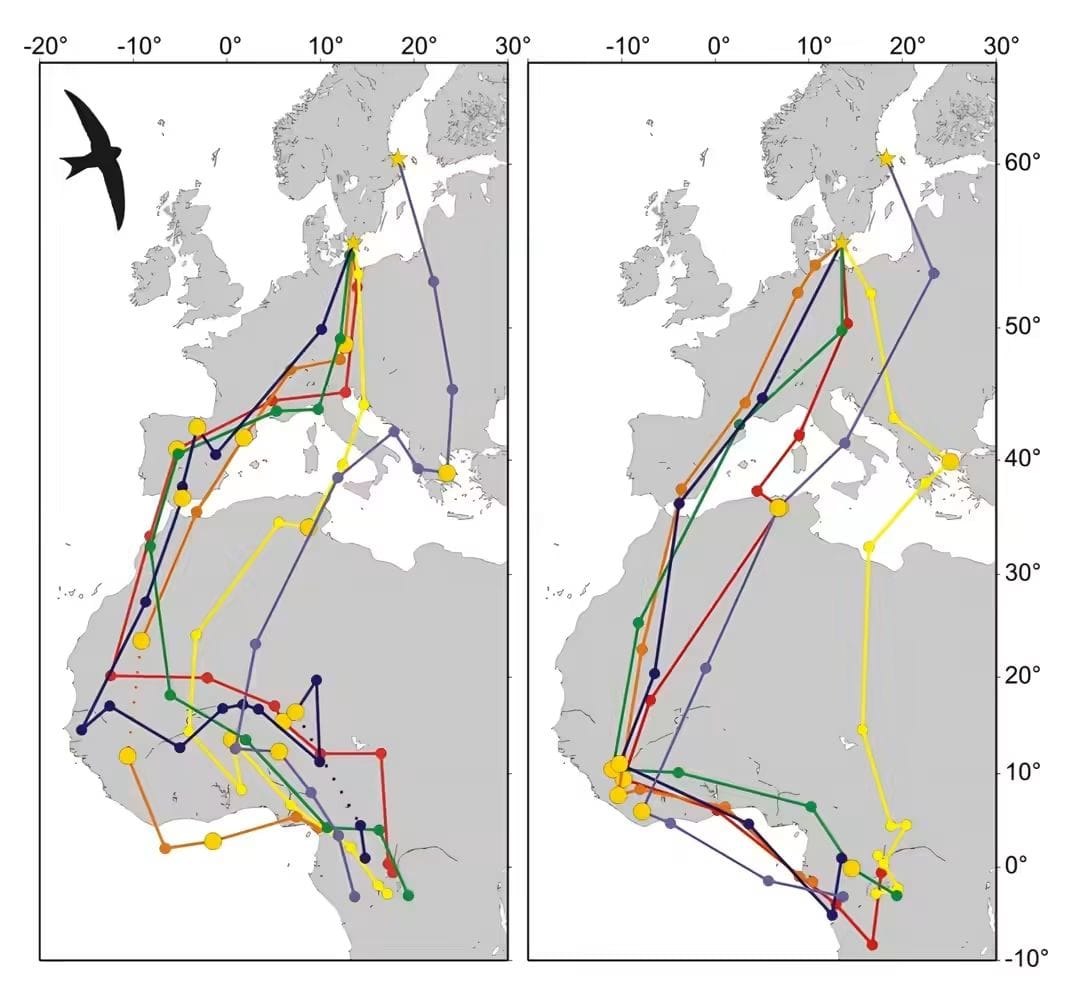
The researchers tracked eight Common Swifts in Sweden and successfully retrieved tracking devices from six individuals, providing almost complete data on their annual migration cycle from Europe to Africa and back.
The data showed that the birds began their autumn migration southwards from Sweden. Some travelled through Europe towards the southwest before crossing the Mediterranean Sea into Africa, while others followed different routes across the Mediterranean region.
The study revealed that the Common Swifts covered considerable distances during migration. The average distance travelled was approximately 9,769 km during autumn migration, compared with around 9,208 km during the spring return journey.
Compared with the direct distance between breeding and wintering areas, the birds’ actual routes were considerably longer, averaging approximately 53% farther than the direct route in autumn and 43% farther in spring.
These indirect routes may be influenced by environmental and climatic factors, including the use of favourable tailwinds, the avoidance of geographical barriers, and access to areas with abundant food resources.
The birds spent the winter in the Congo Basin and Central Africa, with an average wintering period of approximately 198 days, or nearly six and a half months.
Differences between autumn and spring migration
The study revealed marked differences in the duration and speed of the two migration journeys.
During autumn migration, the journey lasted an average of approximately 69 days, comprising 30 days of flight and 39 days at stopover sites. In contrast, spring migration took around 29 days, including 21 days of flight and eight days at stopover sites.
Average overall migration speeds were:
🔹 Autumn: 170 km per day
🔹 Spring: 336 km per day
During active flight periods, movement speeds averaged approximately 344 km per day in autumn and 469 km per day in spring, with a maximum recorded rate of around 650 km per day.
The influence of wind on migration
The study highlighted the important role of wind conditions in shaping migration speed, particularly during the spring return journey.
Birds following routes through western Africa benefited more from favourable tailwinds. In contrast, the individual that followed a more direct route across the Sahara encountered headwinds and recorded the slowest migration speed among the tracked birds.
These findings demonstrate that migration route selection is influenced not only by distance but also by prevailing wind systems and atmospheric conditions.
A remarkable aerial lifestyle
The study also highlighted the distinctive aerial lifestyle of the Common Swift. The tracked birds spent a substantial proportion of their annual cycle migrating and wintering, reflecting their exceptional adaptation to life on the wing and their ability to feed while airborne.
The researchers estimated that the birds’ annual cycle was distributed approximately as follows:
🟢 19% — Breeding period
🟠 27% — Migration
🔵 54% — Wintering period
What does this study tell us about Libya?
One particularly relevant finding for Libya is the migration map published in the study, which shows that one tracked Common Swift followed a route passing through the geographical area of Libya during its journey between Europe and Africa.
The Common Swift (Apus apus) is recorded in Libya as a passage migrant. The tracking results therefore provide a valuable perspective on the species’ movements across the Mediterranean region and highlight the importance of Libya’s geographical position within the wider network of migratory bird routes connecting Europe and Africa.
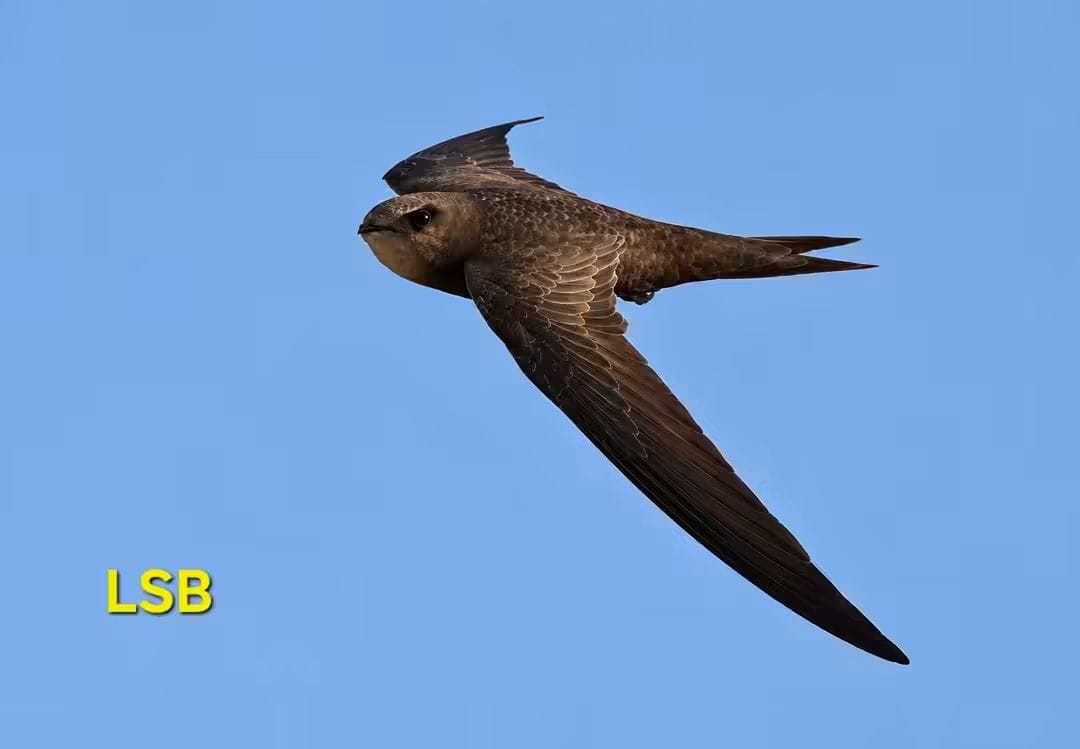
📸 Bird photograph: Abdulnasser Eisa, member of the Libyan Society for Birds (LSB).
🗺️ Map source: Åkesson et al. (2012), PLOS ONE.
Leave a Reply