




GPS Study Reveals Black Kite Migration Routes Across the Mediterranean — Libya Lies Along Their Migration Pathways
A scientific study published in Biologia in 2021, entitled “Weather-influenced water-crossing behaviour of black kites (Milvus migrans) during migration,” investigated how Black Kites cross large bodies of water during migration and how weather conditions, particularly tailwinds, influence flight speed, crossing distance and the outcome of these journeys.
The researchers used GPS/GSM tracking technology to monitor Black Kites between 2014 and 2020.
A total of 32 Black Kites were fitted with tracking devices, including 30 nestlings from 19 nests and two adult birds.
The devices were deployed on birds in the following countries:
- Austria: 2 birds
- Bulgaria: 4 birds
- Czech Republic: 18 birds
- Germany: 1 bird
- Slovakia: 5 birds
- Ukraine: 1 bird
- Hungary: 1 bird
The researchers used solar-powered tracking devices weighing approximately 20 grams. These devices recorded the birds’ positions using GPS, generally at six-hour intervals, and transmitted the data through the GSM network.
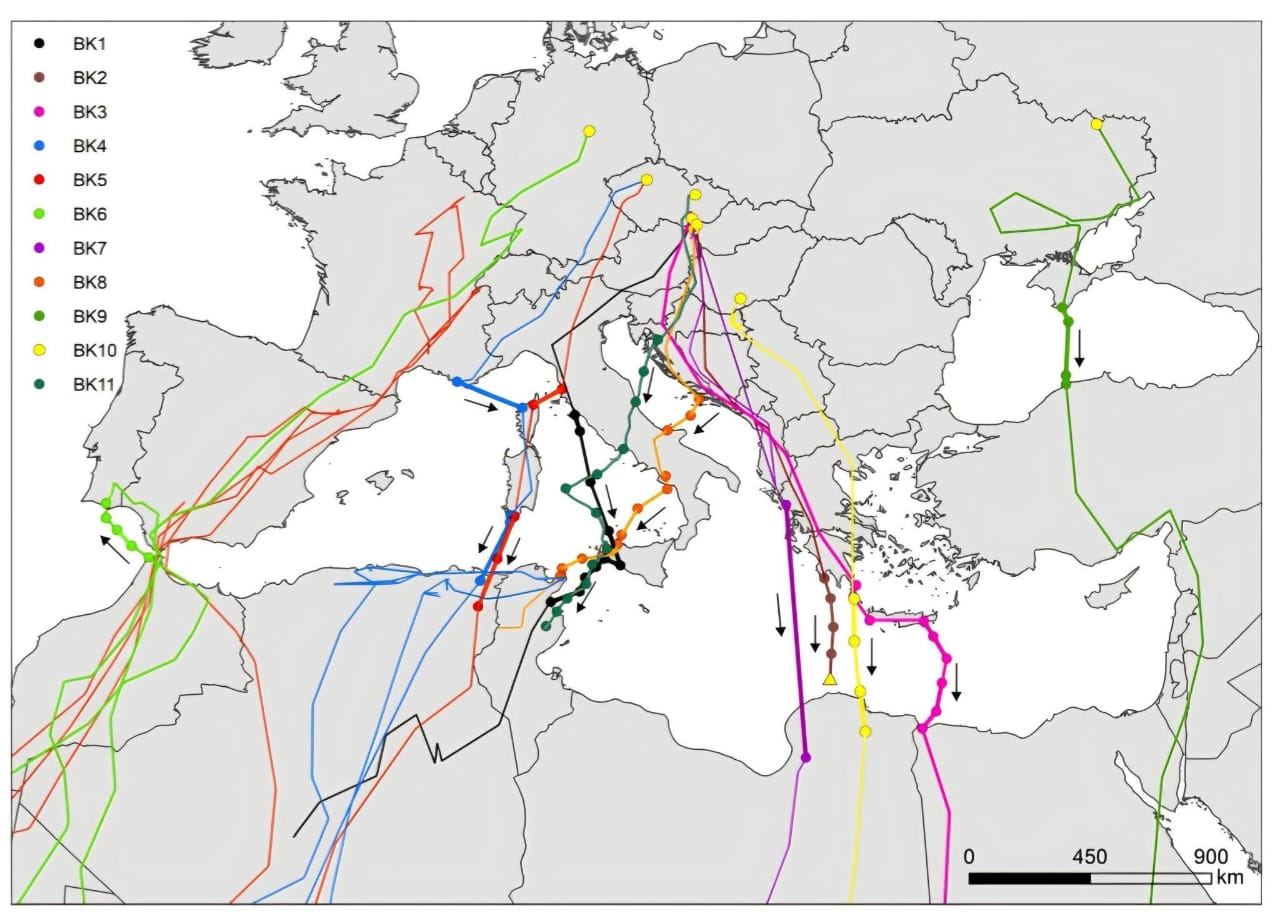
Of the tracked birds, 11 were selected for analysis because they attempted direct crossings of large bodies of water outside their usual migration routes. Ten attempted to cross the Mediterranean Sea, while one attempted to cross the Black Sea.
Key findings
The study revealed the remarkable ability of Black Kites (Milvus migrans) to cross extensive stretches of open water, with the longest recorded crossing reaching 542 km.
Average flight speeds during water crossings ranged from 27.7 to 97 km/h.
The researchers found a strong positive correlation between tailwind speed and average flight speed ((r = 0.90,\ p < 0.05)), suggesting that favourable tailwinds can help Black Kites increase their speed when crossing the sea.
Conditions generally associated with more favourable water crossings included:
- ☀️ Sunny to partly cloudy weather.
- 🌡️ Temperatures above 20°C.
- 💨 Supportive tailwinds.
- 🌀 Atmospheric pressure above 1013 hPa.
Three tracked Black Kites linked to migration between Greece and Libya
One of the study’s most relevant findings for Libya was the documentation of three Black Kites — BK2, BK7 and BK10 — associated with migration routes between Greece and Libya.
Black Kite BK2: A crossing that ended in mortality before reaching Libya
On 19 August 2017, BK2 departed mainland Greece towards Libya. The bird was approximately 88 days old when it crossed the sea and covered 459 km over water in 11.9 hours, at an average speed of 38.5 km/h.
However, it did not complete the journey. The bird died just 66 km from the Libyan coast.
Black Kite BK7: A southward crossing towards Libya
On 23 September 2019, another tracked Black Kite, BK7, was recorded following a migration route from Greece towards Libya. Its estimated age at the time of the sea crossing was 94 days.
Black Kite BK10: A remarkably fast Mediterranean crossing
On 17 September 2019, BK10 crossed from Greece towards Libya, covering approximately 395 km over the Mediterranean Sea in just 4.1 hours.
Its average speed reached 97 km/h, the highest average flight speed recorded in the study.
Why is this study important for Libya?
The findings add valuable evidence to our understanding of Libya’s position within the network of bird migration routes connecting Europe and Africa.
By documenting individual Black Kites travelling from Greece towards Libya, the study demonstrates how GPS/GSM tracking can reveal migration routes over the Mediterranean that are difficult to document through field observations alone.
It also highlights the importance of weather conditions in shaping migration behaviour and the challenges birds may encounter during long-distance sea crossings.
The Black Kite (Milvus migrans) is recorded in Libya as a passage migrant, reflecting the country’s role as a migration corridor between European breeding areas and African wintering grounds.
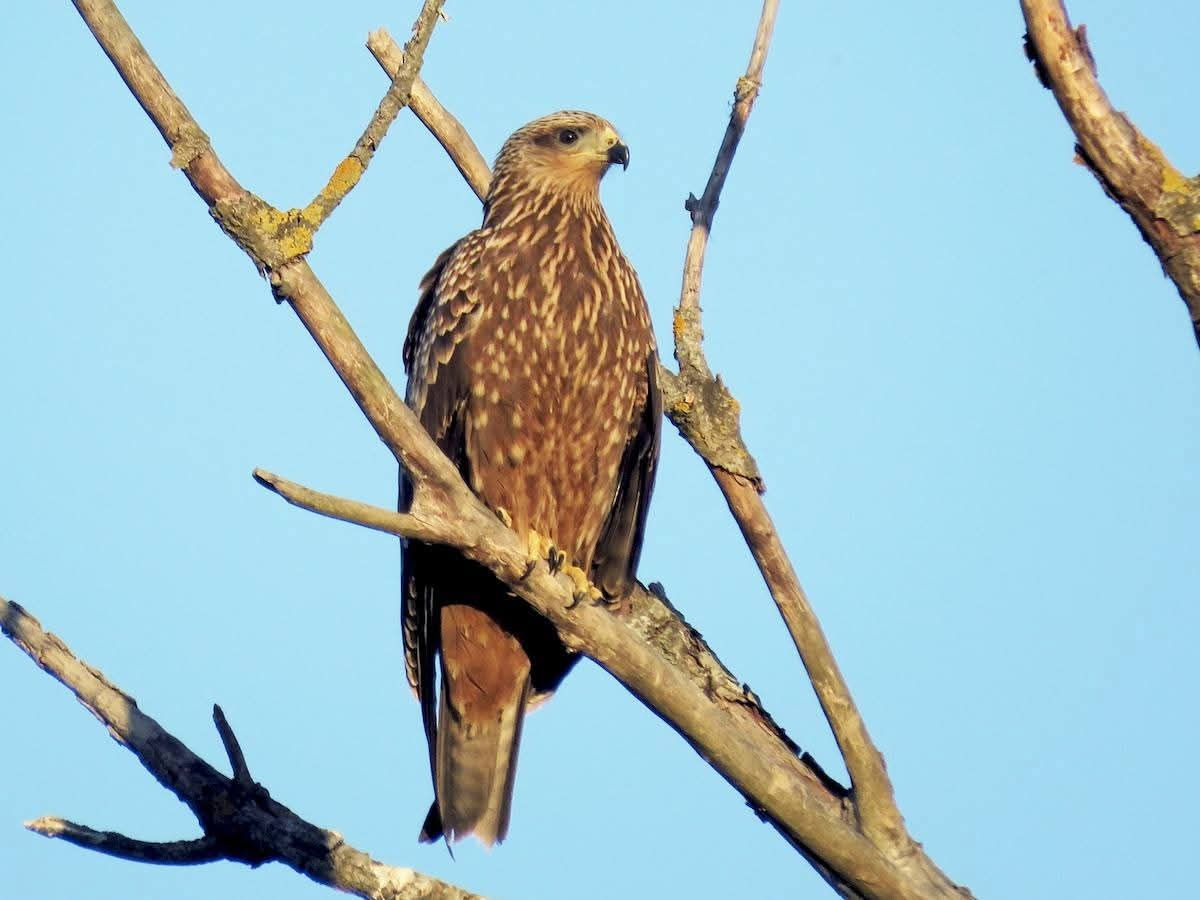
Bird photograph: eBird
GPS tracking maps: Literák et al. (2021)
Leave a Reply