




Scientific Study: Tracking Eleonora’s Falcon Reveals the Limitations of GPS Telemetry in Determining Migration Timing — Libya Lies Along Its Migration Route
A scientific study published in the Journal of Ornithology in 2026, entitled “Telemetry alone may not be reliable for a correct determination of population-level migration timing: lessons from Eleonora’s Falcon (Falco eleonorae)”, highlights the limitations of relying solely on GPS tracking to determine the timing of migration across an entire bird population.
The researchers used Eleonora’s Falcon (Falco eleonorae) as a model species, tracking approximately 6.9% of an Italian breeding population in Sardinia during 2022 and 2023.
The study examined whether arrival dates recorded for a limited number of GPS-tagged birds could accurately represent the migration timing of the entire population.
To investigate this question, the researchers also analysed 498 Eleonora’s Falcon observations from Sardinia, collected through citizen-science platforms such as eBird, iNaturalist and Ornitho.it, alongside records from local ornithologists. These observations were then compared with GPS tracking data.
Key findings
The researchers obtained complete data for 14 spring migrations, comprising seven migrations in 2023 and seven in 2024. These data involved 12 individuals: nine females and three males, out of a total of 25 birds tracked using GPS.
The interval between crossing the Mediterranean Sea and arriving at the breeding colony was generally short, with a median of four days and a mean of 9 ± 14 days. Some individuals reached the colony on the same day they crossed the sea.
Arrival dates at the colony ranged from 7 May to 20 August, with most arrivals occurring in May. The mean arrival date was 28 May, while the median was 18 May. The earliest recorded arrival was on 7 May in 2023 and 10 May in 2024.
A clear discrepancy emerged between arrival timing estimated from field observations and that derived from GPS tracking.
Based on observational data, the estimated 10-day window for the end of pre-breeding migration fell between 17 and 27 April. However, none of the GPS-derived arrival dates fell within this period. The earliest GPS-recorded arrival was approximately 15 days later than the period estimated from observations, and 41 days later than the earliest recorded sighting.
Statistical simulations further demonstrated that tracking just seven birds provides a relatively low probability of accurately representing the arrival timing of the entire population. The estimated probability was only 15–20%.
According to the simulations, approximately 150–200 individuals would need to be tracked to achieve a probability exceeding 95% of adequately representing population-level arrival timing under the conditions of this particular study.
These findings suggest that migration dates derived from a small number of tracked birds may be useful for describing individual behaviour and migration routes, but may not be sufficient to determine the timing of migration for an entire population.
Libya’s role in the migration route
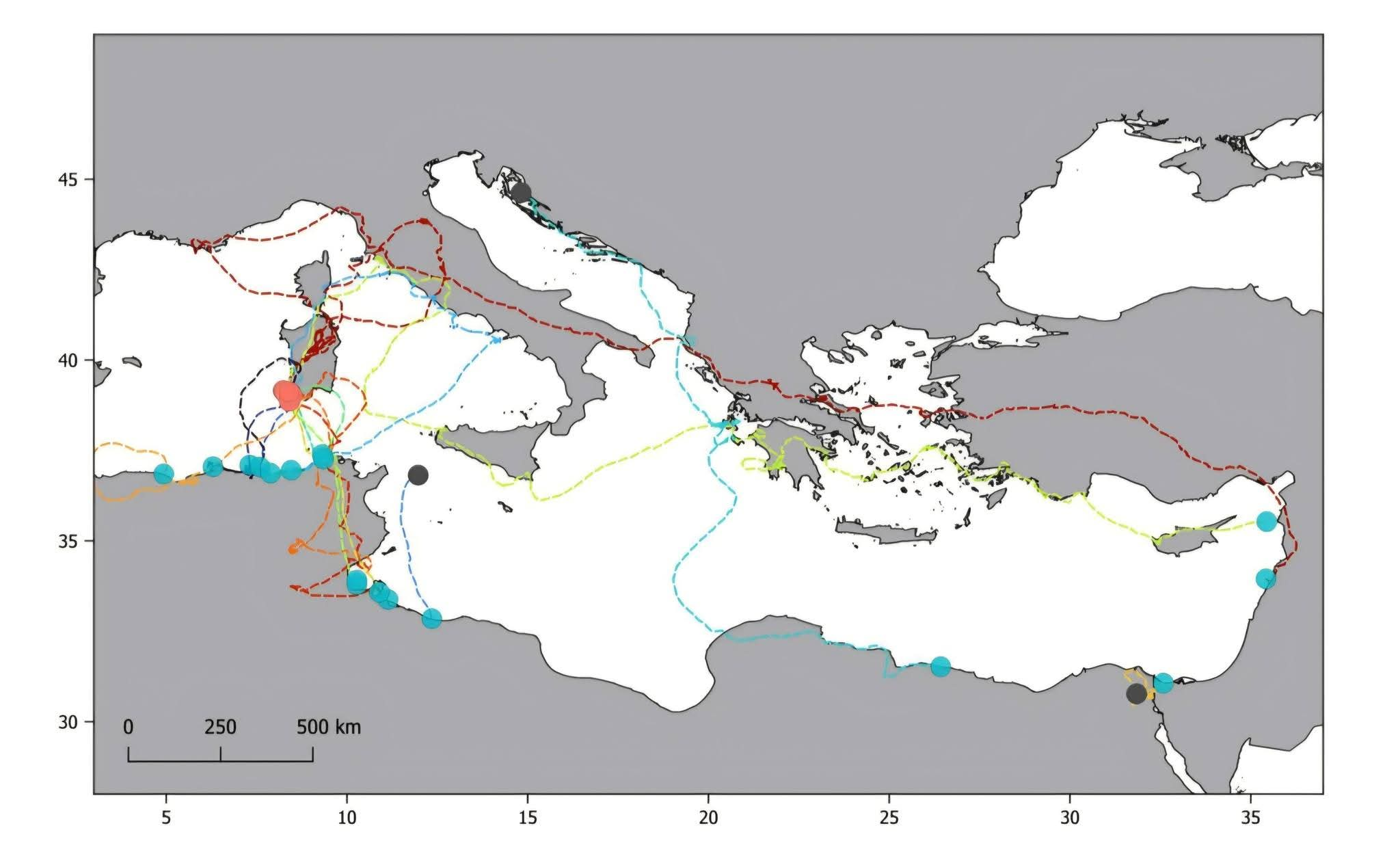
One particularly relevant finding for Libya concerns the migration routes illustrated in the study’s accompanying map, which shows the final stages of the birds’ spring migration towards Sardinia.
The study indicates that most individuals crossing the Mediterranean during this stage passed through the Sardinia Channel, arriving from Algeria, Tunisia and Libya.
This highlights Libya’s geographical position along Eleonora’s Falcon’s migration route through the central Mediterranean. It also provides further tracking-based evidence of the connectivity between bird migration routes in North Africa and the islands and countries of southern Europe.
Eleonora’s Falcon (Falco eleonorae) is recorded in Libya, where it is classified as a passage migrant.
The study also underscores an important methodological lesson for migration research: combining satellite telemetry with field observations and citizen-science records can provide a more representative understanding of population-level migration patterns than relying on tracking data alone.
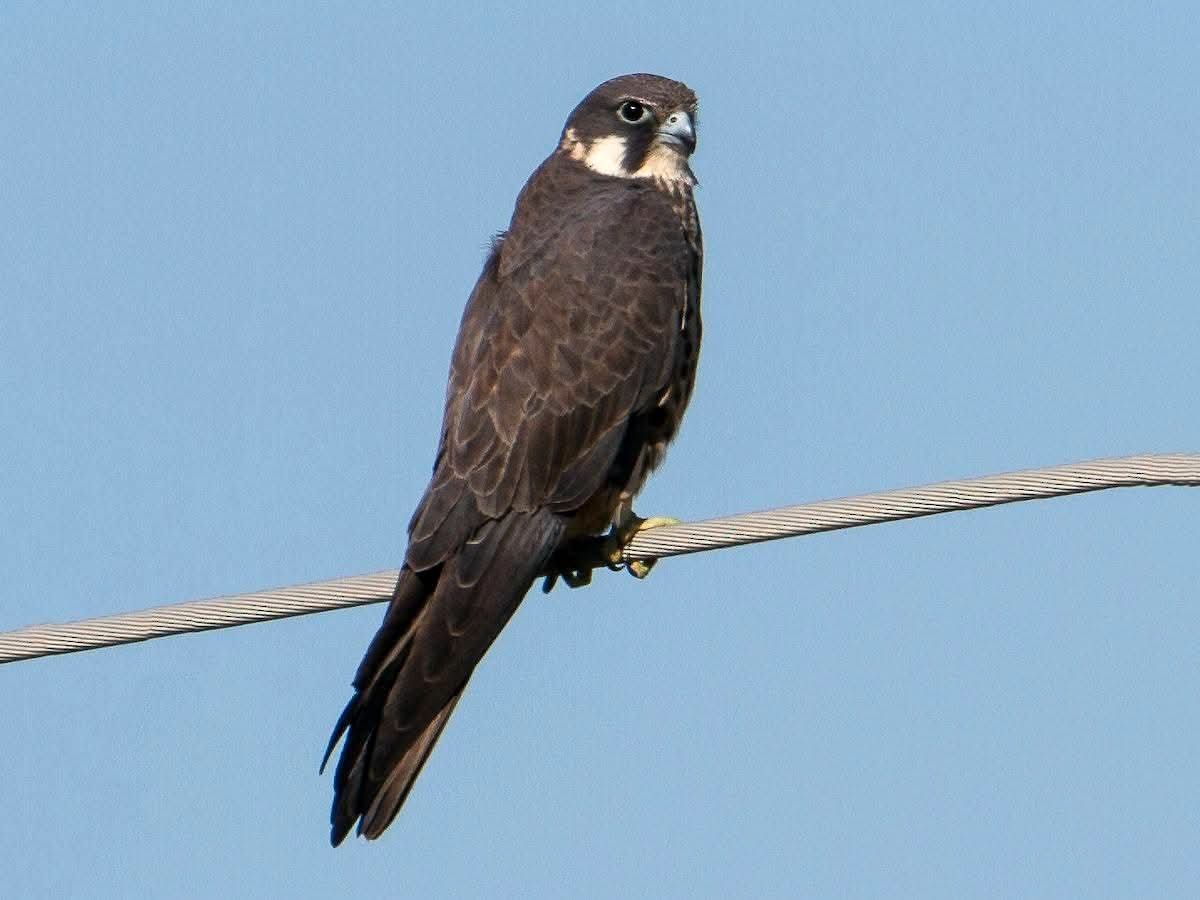
Bird photograph: eBird
Migration route map: De Pascalis et al. (2026)
Leave a Reply