

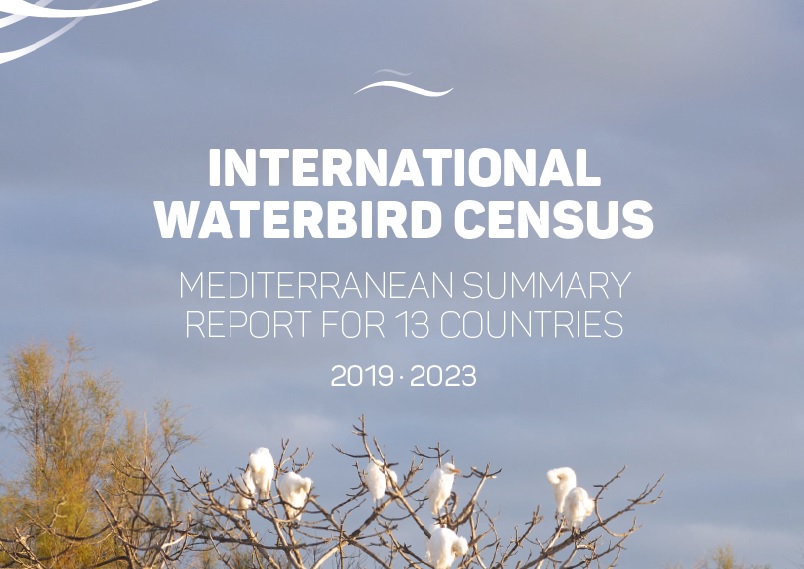

Summary Report of the International Waterbird Census in the Mediterranean for 13 Countries (2019–2023).
The Mediterranean Waterbird Network (MWN), in cooperation with the Tour du Valat Institute and partner organizations in 13 Mediterranean countries, including Libya, has published a summary report of the results of the International Waterbird Census (IWC) covering the period 2019–2023.
The report provides a comprehensive scientific assessment of the status of waterbirds and wetlands in the Mediterranean Basin, based on field data collected through a regional coordination network aimed at supporting biodiversity conservation efforts and promoting the sustainable management of wetland ecosystems across the region.
Extensive Field Monitoring Efforts:
The report indicates that more than 10,500 volunteers contributed to data collection during the monitoring period. A total of 2,972 wetland sites were monitored regularly (at least seven times) between 2009 and 2023, providing a long-term database for environmental trend analysis. In total, 210 species of waterbirds were recorded during the current reporting period.
Key Findings: Diverging Trends and Growing Climate Impacts:
Scientific analyses revealed significant variation in waterbird population trends across the Mediterranean Basin, notably:
- Alarming Declines in the Southern Mediterranean: Globally threatened species, such as the White-headed Duck in Algeria and Tunisia, and the Marbled Teal, have shown continuous population declines. The report attributes these trends mainly to wetland loss and degradation, in addition to the increasing impacts of climate change on species distribution ranges.
- Stability and Recovery in the Northern Mediterranean: In contrast, parts of northwestern and central Europe have recorded stable or increasing populations for several species. This positive trend is largely attributed to improved conservation measures and the availability of a well-managed and effective wetland network.
Sites of International Importance and Ramsar Criteria:
The report identified 222 wetland sites in participating countries that meet the international importance criteria for waterbirds (supporting either 20,000 waterbirds regularly or 1% of a specific species’ global population). However, it noted that only about 50% of these sites are currently designated as Ramsar Wetlands of International Importance, highlighting a clear legal protection gap and a major opportunity to strengthen the regional protected areas network.
Avian Influenza:
A dedicated section of the report addressed developments related to Highly Pathogenic Avian Influenza Viruses (HPAIVs) since 2022, which have caused unprecedented mass mortality events, particularly among colonial species such as pelicans and gulls. The report strongly recommends strengthening wildlife health surveillance programs and enhancing data exchange among countries to improve epidemic monitoring and limit disease spread.
Call for Strengthened Regional Cooperation:
The report concludes by emphasizing that the conservation of waterbirds in the Mediterranean Basin is a shared regional responsibility, requiring:
- Enhanced cooperation among countries>
- Improved quality and continuity of scientific data.
- Accelerated wetland restoration programs to confront the accelerating impacts of climate change and ensure the long-term sustainability of waterbird populations.
Leave a Reply