

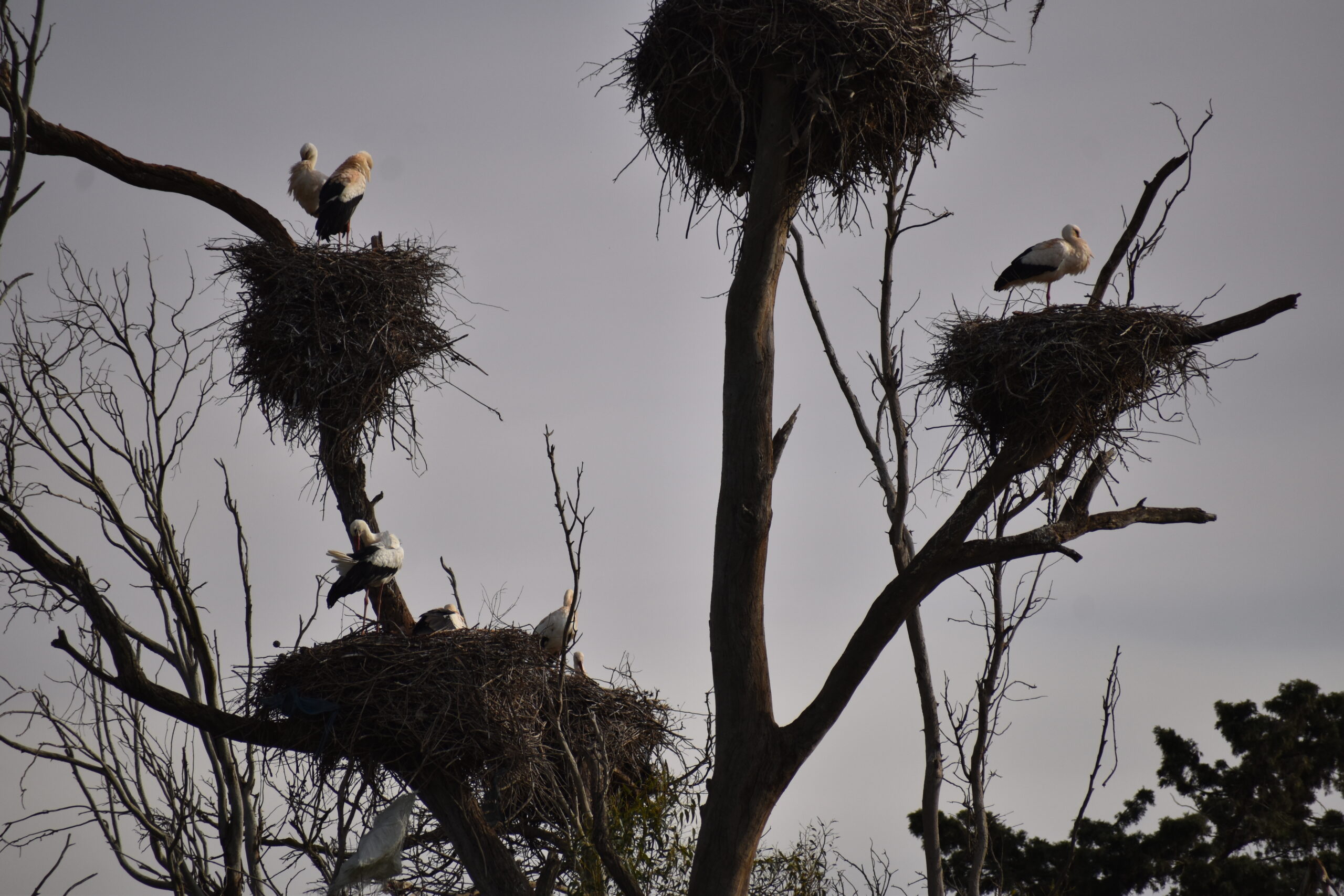

Preliminary Results of the 8th International White Stork Census (Ciconia ciconia): Libya Among the Participating Countries for the First Time.
The International White Stork Census (Ciconia ciconia) is one of the most prominent long-term scientific monitoring programs for birds at the global level. Conducted roughly every ten years, the census aims to assess the population status, geographical distribution, and breeding rates of White Storks across their main range in Europe, North Africa, and parts of Asia.
The program is implemented under the supervision of the Nature and Biodiversity Conservation Union (NABU) in Germany, in coordination with BirdLife International and its network of national and regional partners. It relies on the collection of precise field data by scientists, environmental observers, and volunteers to analyze population dynamics and evaluate the impact of environmental, climatic, and urban changes on this species.
In 2024, the 8th International White Stork Census was carried out with the participation of 55 countries from the species’ main distribution areas — including Libya, which joined this global program for the first time. The census in Libya was coordinated by the Libyan Society for Birds (LSB) in collaboration with the Alhaya Organization for the Protection of Wildlife and Marine Organisms.
According to preliminary results recently released by NABU, data from 38 countries have been received so far, including Libya, Turkey, and Ukraine, while several countries continue their data analysis through 2025. Early indicators suggest a continued positive trend in White Stork populations compared to previous censuses, showing an increase of approximately 40% since the 1994/1995 census, largely attributed to improved environmental conditions and the restoration of wetlands in breeding areas.
Libya’s participation in this program highlights the importance of integrating national efforts into international scientific initiatives for monitoring migratory birds. It also represents a significant scientific milestone toward assessing the status of bird populations in Libya and supporting strategies for the conservation of natural habitats and biodiversity across the country.
Leave a Reply