




A Scientific Record Adds a New Bird Species to Libya’s Bird List
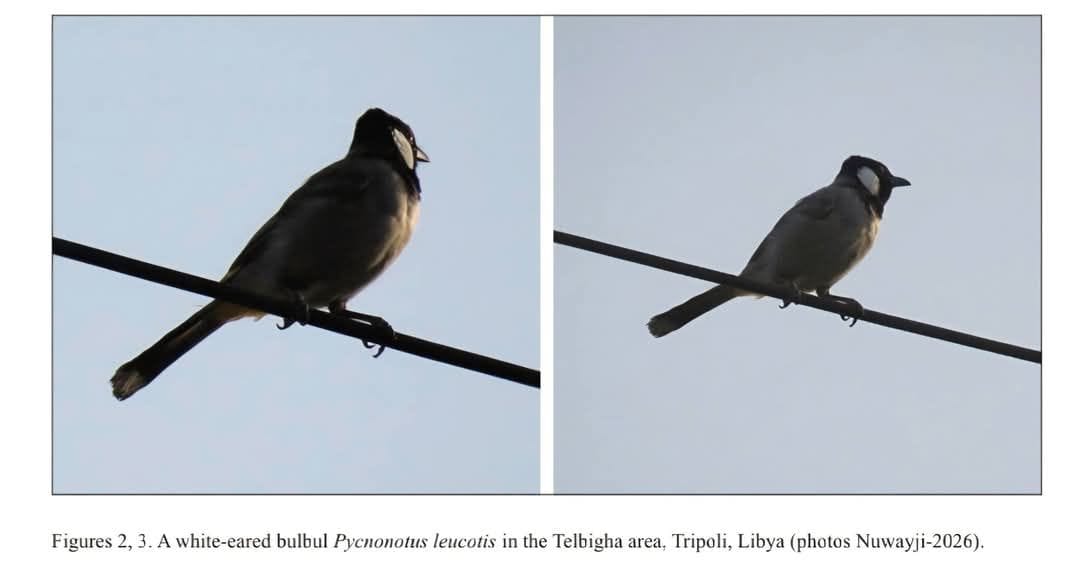
A recent scientific study has documented the first confirmed record of the White-eared Bulbul (Pycnonotus leucotis) in Libya, following the observation and photographing of an individual in Talbigha, within the Souq Al-Jumua municipality of Tripoli, on 30 July 2026.
The study, entitled “First documented record of the White-eared Bulbul Pycnonotus leucotis (Gould, 1836) (Passeriformes: Pycnonotidae) in Libya,” was published in Biodiversity Journal, Volume 17, Issue 3, pages 367–372.
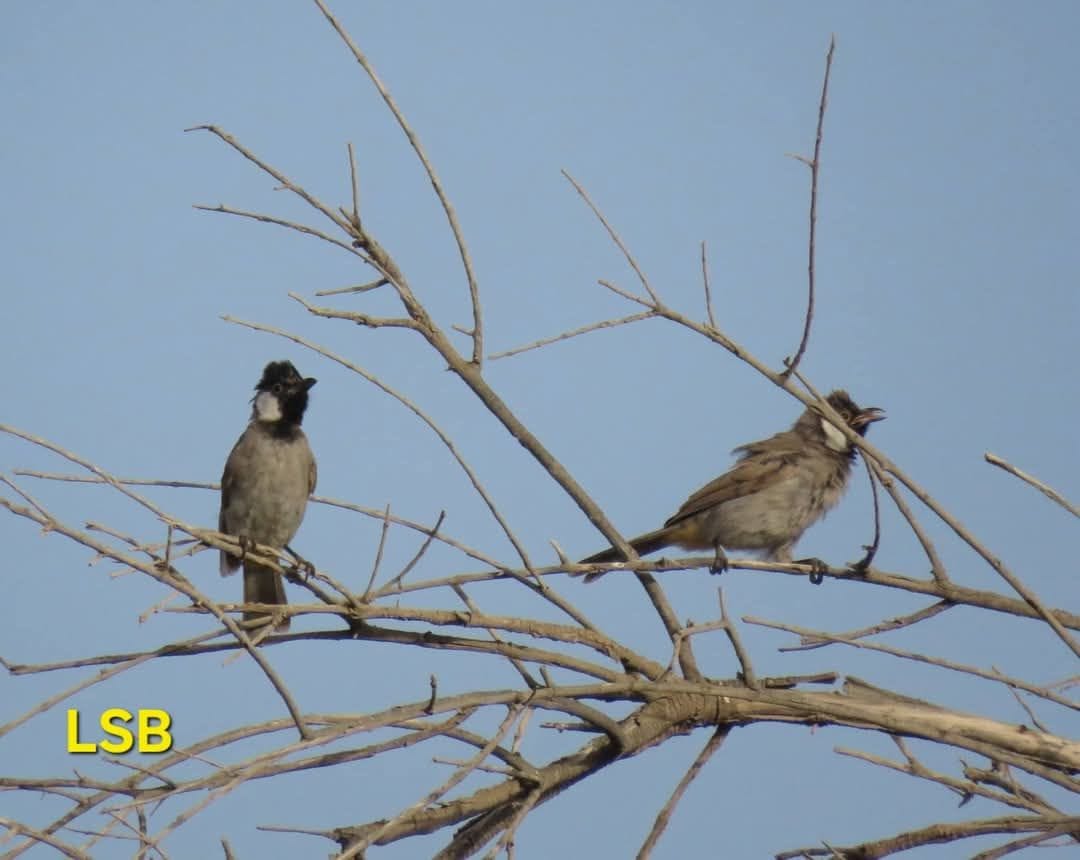
Field observations recorded the bird perched on an electrical wire. Its identification was based on distinctive morphological features, including a dark head, a prominent white patch around the cheek and ear, a greyish-brown body, a relatively long tail, and a yellow vent beneath the tail.
The study describes P. leucotis as predominantly resident, with its native range centred in southwestern Asia, including parts of India, Pakistan, Afghanistan, Iran, Iraq, and the Arabian Gulf region. Taxonomically, the species belongs to the order Passeriformes and the family Pycnonotidae.
The authors consider natural arrival in Libya through migration unlikely, given the species’ largely sedentary nature and the absence of a known regular migratory route connecting its native range with North Africa.
Instead, the study suggests that the bird’s appearance in Libya may be associated with human activities, such as escape from captivity or deliberate release. The White-eared Bulbul is known in the ornamental bird trade and has been recorded as an introduced species in several countries in the region. Previous studies have documented its establishment outside its native range, including in Saudi Arabia and other Gulf countries.
During the observation period, the researchers found no evidence of breeding, nest building, territorial behaviour, flock formation, or the presence of additional individuals.
However, repeated sightings in the same area during the first week of August 2026 indicate that the bird remained there for at least several days, highlighting the importance of continued monitoring at the site.
This record is particularly relevant to bird monitoring and biodiversity conservation in Libya, as it draws attention to the potential arrival of non-native species through the bird trade, deliberate release, or escape from captivity.
The authors recommend continued monitoring to determine whether the individual disappears after a short period, whether additional individuals appear, or whether the species begins breeding and could eventually establish a stable population.
This record adds to the growing interest in documenting non-native birds in Libya. Early detection and accurate documentation are essential for identifying newly introduced species before they have the opportunity to establish and spread.
📷 Photograph: Alaa Noweiji, member of the Libyan Society for Birds (LSB).
Leave a Reply